Home

2019 visible migration statistics…

Pink-footed geese moving N/W

My visible migration is conducted from the watch point at Caldene fields, Low moor and gives a good indication of individual species and numbers of species passing through and beyond our immediate area.

2019 was an average year with a total of 72 species recorded. Field observation hours totaled 238 whereas I spent 212 hours in the field during 2018.

Highlights: Individual species observed : Ring Ouzel, Curlew, Harrier Sp, Great White Egret, Rose-ringed Parakeet and Whooper Swan.

+ = increase on 2018 total. – = decrease on 2018 total.

Autumn totals of Finches observed: Goldfinch 3,560+ . Linnet 61-, Greenfinch 315 +, Bullfinch 130 +, Lesser Redpoll 30 -, Brambling 26 -, Siskin 161 +

Thrushes: Redwing 22,035 +, Fieldfare 12,773 +,

Starling: 5,332 –

Pink-footed Goose: 8,716 +

End of year bird watch…

Today I thought i would have a bit of fun and see how many birds I could observe in the Low moor & Oakenshaw area. I started at Caldene fields and quickly found the normal garden birds followed by Pied Wagtail and a nice feeding Grey Wagtail.

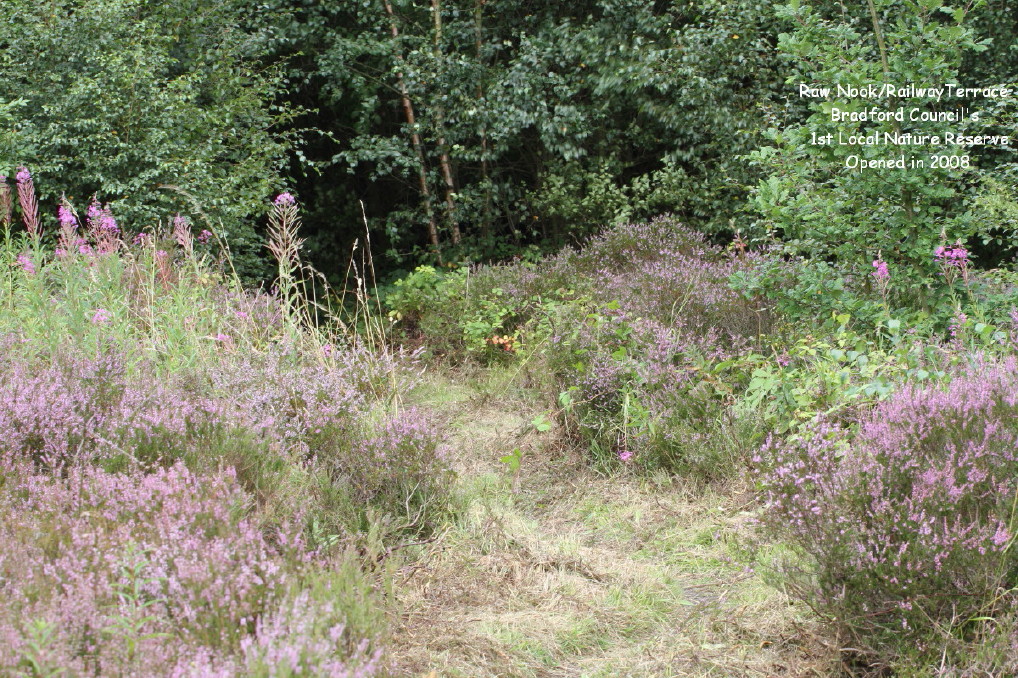
Raw Nook Nr produced a Great Spotted Woodpecker and a number of Bullfinch. I entered TH Beck and had a quick scan for my old mate the Otter..but no luck. However, I found a Water Rail which will probably over winter at the site. My list stood at 30 species. I then went to Harold Park lake and added Mute Swan, Tufted duck, LBB Gull and Canada Goose.

Tufted Duck at Harold Park lake

I then moved onto Park dam and found 3 Little Grebe but sadly no Great Crested Grebes were found at either site. So the final tally was 37 different species with no sightings of a Greenfinch or Fieldfare.

Lucky escape…

Had a close encounter of the Sparrow Hawk kind today at Caldene fields. I was photographing a female Sparrow hawk whilst hiding behind a bush.

Everything was fine but suddenly the birds posture changed….

And it flew directly at me. I ducked down and covered my face…What I hadn’t realised was a House Sparrow was hiding just above me….So I had a luck escape….sadly the House Sparrow didn’t..

Updates…

Since the sighting of the Otter at Toad Holes Beck I have made daily visits not only to the top pond but also the two lower ponds. Sadly there has been no further sightings in our area. This leads me to think that the elusive Otter may have been passing through or commutes to our waterways and now may be anywhere in the south Bradford area. I am scaling down visits to casual ones but would urge anyone out walking to keep an eye out for special visitor.

Moving on I have now finished visible migration in our recording area for this year. However, recently there has been a nice influx of Goosander passing through with 13 on the 30/11, 2, 3/11 and 1 on the 5/12.

Otter…

An early start today at Toad Holes Beck where I had seen the Otter proved unsuccessful. So around 09.00 I searched the two lower ponds and beck but again with no joy.

Research suggests Otters can move a fair distance during a day so the animal may have left the area however, they are shy and very elusive so could be in the undergrowth…will check again in the locality.

Otter!!!

Never in a million years did I ever think I would be writing my blog about an Otter sighting! But I am. After finishing my visible migration watch this morning I thought I would go into Toad Holes Beck to see if any duck species were about. I was scanning the reedbed at 09.45 when I saw a dark object moving in the reeds.

I first thought it was either Moorhen or a Coot. Then suddenly out popped an Otter….I thought it can’t be but it climbed out of the water on to a flattened area of Reedmace and started to have a scratch in full view. It then slid into the water and swam again giving good views to a nearby bank and out of sight.

I was elated….but then a bit down as I did not bring my camera. So I headed home and returned with my camera and waited and waited in all about a hour….but no sign.

So what a brilliant record for our area…I will update again in the next few days with a photo….fingers crossed.

Bullfinches doing well…

Data from watching visible migration as I do at Caldene fields can provide valuable information on the ongoing status of some of our common birds. An example of this is the Greenfinch which has declined by some 59% over the last ten years. To illustrate this point on a local level I recorded 1,662 Greenfinch in autumn 2008 in 77 hours of observations. This autumn 275 Greenfinch have been recorded in 220 hours!….very sad!

However, in contrast the Bullfinch seems to be doing better.

Totals of the left and years at the bottom

As the graph illustrates there appears to be an upturn in numbers since 2018 where 212 hours of observations were conducted and 220 hours in 2019.

Male Bullfinch heading N over the watch point

In fact I recorded 19 Bullfinch on passage with a further 3 present on the 19/11 which is a site record. So early signs suggest the species may be doing well…lets hope the Greenfinch follows suit.

Reaping the rewards with ”A mega rarity”…

Record shot of the Great White Egret

This post was supposed all about our scythe training with the YWT which took place on Saturday….however, today whilst watching visible migration from Caldene fields I found a real rarity…A Great White Egret!! which came in from the E and moved N. This bird is a site first for our area and a bird I didn’t expect to find …..

Now back to earth….Yes on Saturday Peter Gurney of YWT gave our group a training session on how to use a scythe, which will be very useful in cutting the meadows.

Is it Friday the 13th….

Peter expertly explained how to set the scythe up to the size of the person using it so it makes it more comfortable and effective when using it.

So off we went scything through the meadow….and Iv’e got to say once you got the hang of it it was very efficient at cutting the meadow.

Peter demonstrates how to sharpen the scythe to keep it in top working order. So all in all an excellent morning and roll on next year when we can put our training into scything the meadows. Our thanks go to Peter ( YWT ) for all his expert knowledge and…. patience !

Visible migration updates…

Sadly visible migration is coming to come to an end as expected at this time of year. During the last week there has been a noticeable drop in finch counts especially Goldfinch.

However, some species are still moving and it was very interesting on the 30/10 when a party of Fieldfares came in high over the watch point and in the flock were 2 Great Spotted Woodpecker suggesting the birds maybe of the nominate form from Scandinavia or beyond. Also recorded again were 867 Pink-footed geese moving to the S/W and N/E.

On the 3/11 there was a bit of a surprise when I located a Rose-ring parakeet east of East Bierely moving S/W. This is the second sighting of the species this autumn. Also on the 3/11 later in the morning 99 Herring gulls came in from the N/E and moved S/W which was a good count for our area.

error: Content is protected !!