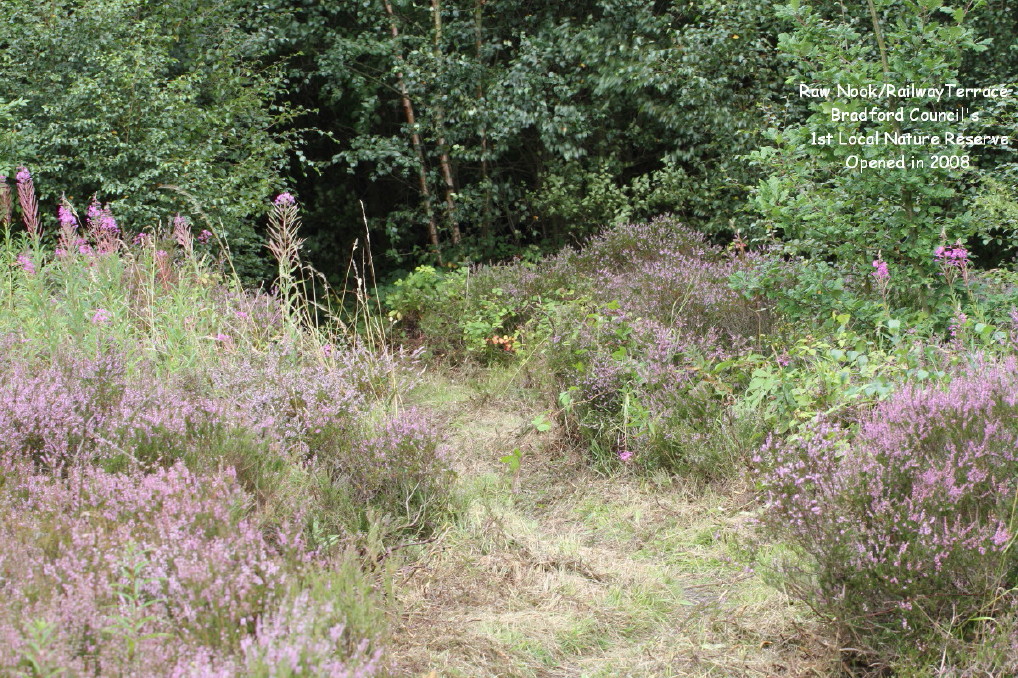
I’ve been going back through my moth records today to see just how many species I’ve logged over the years across our local patch — Caldene Fields, Raw Nook LNR and Toad Holes Beck here in Low Moor, Bradford.
The total so far stands at 510 moth species.
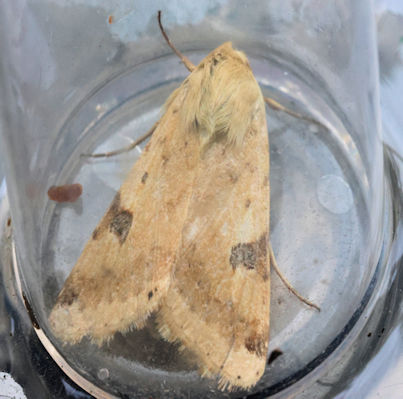
A recent migrant moth arrived, The Bordered Straw (Opposite)
At first glance you might compare that with the roughly 2,500 moth species found in the UK and think, “Well, that’s only about a fifth of the national total.”
But that comparison misses something important.
Our recording area is entirely urban — surrounded by industry, housing and fragmented pockets of green space. These are not sweeping nature reserves or untouched landscapes. They are the small, pressured habitats that cling on between roads, railways and development.
And yet, despite all that, these places support over five hundred species of moths.
That is something worth celebrating.
Moths are also powerful indicators of environmental health. Their diversity tells us how well our ecosystems are functioning, how rich our habitats are, and how much life is still thriving in the cracks and corners of our urban landscape.