Home

Spring sunshine brings out a Queen Bumblebee and an interesting Buzzard sighting…

Yesterday I saw my first Queen Bumblebee at Caldene Fields looking for a nest site…

I also received an email from Phil who saw a single Buzzard 11.49am flying South East over Bailiffe Bridge towards Chain Bar Roundabout being buzzed by corvid.

This is quite interesting as the Common Buzzard bred for the first time last year in south Bradford and research suggests radio-tracked individuals do move away from their nest in the first autumn, and then come back to the nest in the following spring, seemingly to check for potential breeding sites.

Is this a young last years bird?

Return of the Coots…

Numbers of Coots always increase during winter at nearby Harold Park and I suspect some of these birds are from Toad Holes Beck.  So it was interesting to note this morning that 5 Coots have now return to the latter site.  Also at Toad Holes Beck were a pair of Grey wagtail which hopefully will bred in the area.

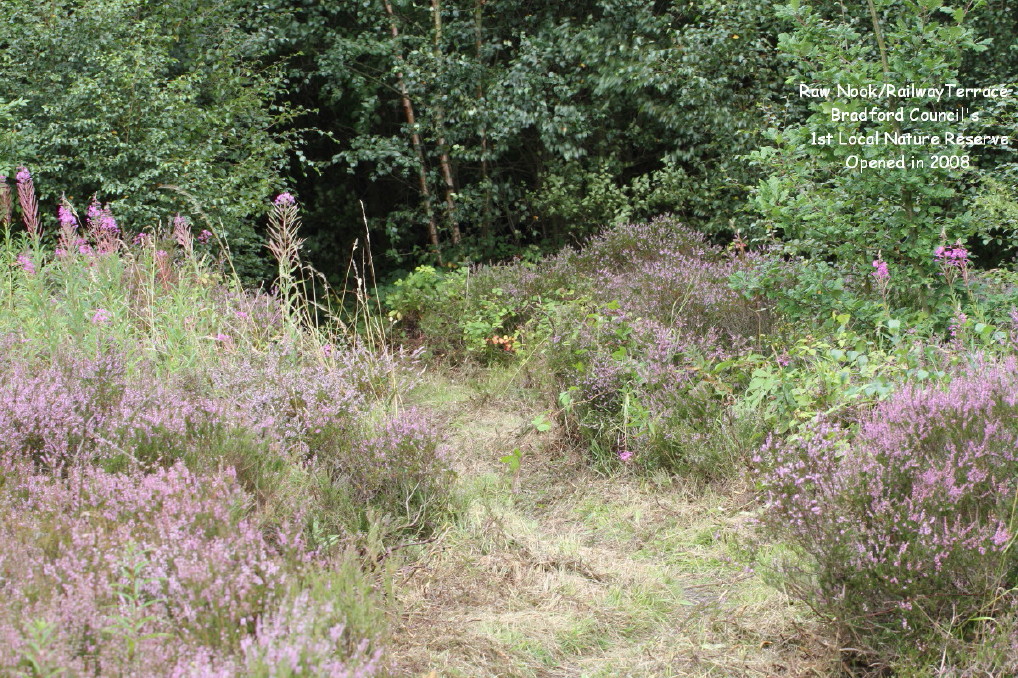
A pair of Canada Geese appeared at the pond at Raw Nook as usual at this time of the year looking for a possible nest site.

Pollution Update…

Firstly been unable to update the site due to other circumstances.  However, received some up to date information from the Environmental Agency. The source of the pollution has been found to be a cross connection from one of the businesses on the Euroway Trading Estate; they had connected to a surface water sewer rather than to the foul sewer network.  They have carried out work to rectify this so all connections should now be correct and it should now only be clean rain water that is discharged down the surface water sewer.

Apparently there still maybe some discharge remaining in the pipe and they are waiting for some rain to flush through the system then will visit to check that it is running clear.


Early bird song…

I went out this morning with the intention of beating my winter bird count of 31 species seen.  But whilst I was walking the area I became more aware, because of the start of a period of milder weather a number of species in song.  Members of the Tit family were evident as was a Dunnock at Toad Holes Beck.  Other species were Robin, a Mistle Thrush again at Toad Holes Beck and a surprise was a Chaffinch at Caldene Fields which was in full song although the song was a weaker version than the one heard in spring.

A dog walker told me his dog flushed 2 Woodcock around Christmas time one at Raw Nook NR…both of which I missed!  Oh and my species count was 30 species with nothing unusual found.

Pollution at Toad Holes Beck…

As reported in my last blog I contacted the Environment Agency about the seepage of a substance into Toad Holes Beck and I have to say within a few minutes the local Environment Agency contacted me and stated an officer was on route to the site.

20150126_24

Seepage into the S/E corner of the middle pond at Toad Holes Beck

A visit this morning shows the seepage has now turned from a reddish colour to white and there is now a strong sickly smell.  Sadly but perhaps thankfully there are no water birds on the pond.

20150126_20


20150126_28

Wildlife and Vegetation dying due to pollution !!!!

I traced the water course and the pollution damage is going into Oakenshaw and beyond….

20150126_32

This is a sad time for our conservation group, local wildlife and the people who care about the environment…but I remain hopeful that the company will be found named and shamed and are made to pay for the damage to OUR environment….

In search of a Jack Snipe and then…

The morning started off really well with 3 Common Snipes flushed at Caldene Fields.  Also there were 2 male Coal Tits who were calling and singing at some distance to each other possibly in the very early stages of claiming territories.  At Toad Holes Beck there was a 1st winter Mute Swan and a good number of calling Bullfinches.

I then went to the middle pond to try and relocate the Water Rail with no joy but then I noticed no water birds were on the pond at all.  On closer inspection and I found a reddish liquid seeping into the pond and all the nearby vegetation was dead of dying and this was one of the feeding places of the Water Rail.

I have reported this pollution from a local company to the Environment Agency in the hope one it stops and two the company is fined as this is not the first time this has happened.

So what of the Jack Snipe… FAILED

2014 Insect report!

In general recorded insects have had an average year however, this is possibly not a true reflection due to only a few August field trips been conducted due other commitments.

I have local concerns about the decline of our native Ladybirds following the movement north of the harlequin ladybird first recorded in the UK in 2004 http://www.harlequin-survey.org.  Whilst I have only recently started to record Ladybirds (so their true ) status cannot be judged it seems native ones are hard to find whereas the harlequin is now common.  Macro Moths did very well with a number of new species recorded.  Whilst butterfly species recorded were static numbers certain species were recorded in low numbers.  Some Dragonflies did really well like the Azure and Large Red whilst the Common damselfly was not recorded this year.

Butterflies

Although 14 different species were recorded in general species like the Meadow Brown, Comma and Orange Tip were all down in numbers. The Ringlet however, did really well with 127 recorded at Toad Holes Beck on 11/7 and a number of breeding pairs were also observed. The Speckled Wood which is normally very common was not as abundant in 2014 and Common Blues were again hard to find.  The status of the Small Skipper remained unchanged but records of the Large Skipper were down to singles.  The Small Tortoiseshell showed slight signs of recovery and the White butterflies particularly the Small were recorded in reasonable numbers.

20140601_23

Green-veined White at Caldene Fields

A visit to the nearby old Odsal tip site revealed a number of Small Heath but as yet none have been recorded in our area.

Dragonflies

Dragonflies numbers and species appear to have been affected by the overgrown weeds and reclaiming of the pond by plants and grasses at Raw Nook NR.  The Common Damselfly which bred at the site was not recorded due to this factor. However, the Azure Damselfly must like this bog type of habitat as a record count of 200+ were observed at the site on 1st of July. Sightings of mating Large Red Damselflies were up on previous year. A male Emperor Dragonfly was at Raw Nook NR pond in mid July.

IMG_0888_1

Azure Damselfly egg laying at Toad Holes beck

Moths

Moth trapping started late this year in May through till October and 98 species were recorded of which 16 were new species for the site.  This is slightly down on last year total of 119 however, the trap was on from March though to October in 2013. The Red Underwing and the Old Lady were found at Raw Nook NR which means the species are present at both Caldene Fields and Raw Nook NR.  The total number of marco Moth species recorded in our area now stands at 189.

20140521_24

Polar Hawkmoth at Caldene Fields

2014 Bird Report!

For an ornithological perspective it has been an average year in our catchment area.  A total of 73 different species were recorded and approximately 28 species bred or thought to have bred in our area.

Numbers of visible migrants observed were fairly low with no record counts of winter Thrushes or Wood Pigeons noted this year despite record counts of Wood Pigeon and Thrushes recorded elsewhere in the UK. To illustrate this point observations hours in 2014 were 129.8 hours and a total of 65,357 birds were recorded. In 2013, 115.25 hours of observations  were made and a total of 91,892 birds were observed.

19255The highest counts were: Redwings 7,005 on 31/10/14,

Fieldfare 3,936 on 31/10/2014 and Wood Pigeon 9,927 on 22/10/14.  The highlights for visible migration were: A hawfinch on 9/10/14, Green Sandpiper on 25/10, an influx of Jays noted in late September with 23 seen on the 23/9/14.  To date I have recorded 85 different species passing through our area.

It appears we may have lost the Little Grebe at Toad Holes Beck the reason is unclear.  Lesser Whitethroat did not bred again however, I am convinced this is due to habitat changes at Toad Hole Beck and I will bring this issue up with our group and Bradford Council.

On a brighter note Tree Sparrows were recorded both on passage and with local House Sparrows at Caldene Fields in early November and it is hoped that more birds will be seen in 2015.  A pair of Swallows successfully bred at Caldene Fields for the first time for many years and a Water Rail has reappeared at Toad Holes Beck for the third winter running.

20140410_18

Busy at Toad Holes Beck

My forecast for 2015 is a record of a Little Egret possibly feeding or moving over Caldene Fields as I have recorded 2 birds during the last two years the latest been quite near as it flew S/W over Wyke.

Just outside our area came the excellent news that the Common Buzzard bred for the first time in Bradford south so I expect more sighting of birds as they search for food over our area.

Checklist for 2014

Species Status Species Status
Cormorant Passage Blackbird Resident
Grey Heron Common Visitor Fieldfare Winter visitor
Mute Swan Passage Redwing Winter visitor
Pink-footed Goose Passage Mistle thrush Resident
Grey Gag Goose Passage Song thrush Resident
Canada Goose Common Visitor Lesser Whitethroat Uncommon Visitor
Mallard Resident Common Whitethroat Visitor
Tufted Duck Winter visitor Blackcap Summer resident
Goosander Passage Willow Warbler Summer resident
Sparrow Hawk Resident Chiffchaff Summer resident
Kestrel Visitor Sedge Warbler Uncommon Passage
Water Rail Winter visitor Coal Tit Resident
Moorhen Resident Blue Tit Resident
Coot Resident leave Winter Great Tit Resident
Green Sandpiper Rare LT Tit Resident
Lapwing Passage Tree Creeper Rare
Black Headed Gull Common Visitor Starling Resident
Common Gull Common Visitor Magpie Resident
Herring Gull Passage Jackdaw Resident
LBB Gull Passage Carrion Crow Resident
Wood Pigeon Resident Rook Passage
Collard Dove Resident House Sparrow Resident
Tawny Owl Visitor Tree Sparrow Rare
Kingfisher Winter visitor Brambling Uncommon Winter
Great Spotted Pecker Resident Chaffinch Resident
Skylark Passage Hawfinch Rare passage
Swallow Summer resident Greenfinch Resident
House Martin Summer resident Bullfinch Resident
Meadow Pipit Common Visitor Siskin Winter visitor
Pied wagtail Passage/C Visitor Lesser redpoll Regular Visitor
Grey wagtail Passage/C Visitor Linnet Regular Visitor
Dunnock Resident Goldfinch Resident
Robin Resident Jay Resident
C Wheatear Passage Common Snipe Winter visitor
Wren Resident Reed Bunting Uncommon visitor
Goldcrest Winter visitor Stock Dove Resident
Swift Resident Summer    
error: Content is protected !!