The first Cormorant of the autumn flew south this morning over the watch point. Also of note was 107 Swallows moving mainly to the west. Grounded birds included 19 Mistle Thrushes feeding, 1 Willow Warbler, at least 2 Chiffchaff and 2 juv Blackcaps.
New Ladybird at last!
Found a Orange Lady ( Halyzia 16-guttata) a new species for our recording area this morning in the moth trap.
Tufted Duck passes through!
Out of the mist this morning at the vismig watchpoint came a female Tufted Duck which flew to the S/W. Whist I have recorded the species several times at Toad Holes Beck I have never had one passing through. This bring my total of different species recorded on migration over Caldene fields to 83.
Visible Migration up and running!
Yesterday I started my visible migration watching at Caldene Fields which will now run through to around early November. This period is still fairly busy for me in that I am still moth recording as well……but I’m certainly not complaining!
Anyway all my visible migration records can be found on www.trektellen.org. A brief summary is as follows: 30/8 = Swallow 79 W/S/W + 1 Swift W/S/W. 31/8 Swallow 115 W + Swift 1 W + the first Meadow Pipits 9 W.
A memorable Moment!
Swallows as we all know have decreased over the last three decades. In fact I looked up an old record from the 21st of September 1979 when approximately 4,000 Swallow gathered early evening at Caldene Fields pre-roost. Residents of the estate were coming out of their homes as Swallows were resting on washing lines, roof tops and phone lines…… Sadly those days have long gone, however, I have noticed this year a welcome increase with 80 adults and juvs seen on wires at East Bierley.
But the most important record for me is the pair that have bred (2 broods) at Caldene Fields for the first time for many a year.

A juv Swallow on ariel at Caldene Avenue
Nightmare seems to be over and missed a Kite!
My personal nightmare computer nightmare appears to be over…I think! My PC crashed with all my records but thankfully they are all backed up…however, I now have to re-install them..
A bit of good news though came from Chris who emailed to say a stunning Red Kite had flown from Wyke over the Low Moor area this morning at 10.45 which is excellent news…. Oh and where was I – trying to sort out the ……..computer. Well done Chris
Plenty of Gold at Caldene Fields!
A minimum count of 42 goldfinch including many juveniles were feeding this morning on Thistle seeds in the fields. I believe this count will be increased by the early autumn.
Also the pair of Swallows are now well into their second brood which is excellent news. Two Linnets were disturbed feeding but frustratingly unable to tell whether they were adults or juveniles. However, two juveniles Bullfinches were at Raw Nook NR indicating local breeding.
Seeing Red at Caldene Fields!
What a beauty a Red Underwing, only the second ever record fed at the sugaring tree at Caldene Fields last night…

Bat night and a big surprise at Caldene Fields!
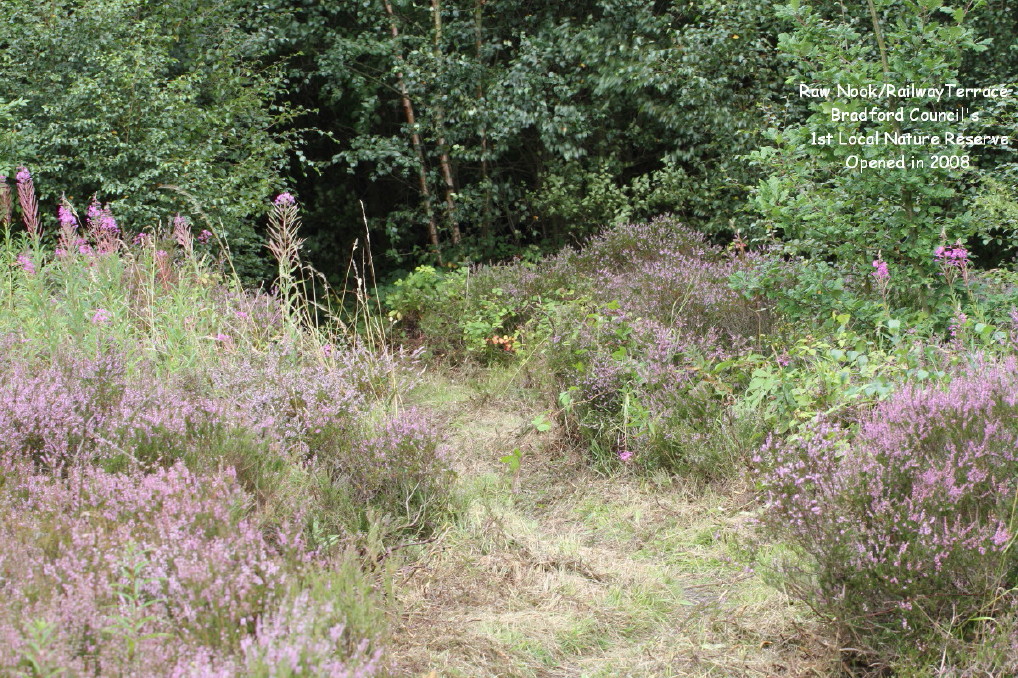
Last night it was agreed with my son-in law and myself would do a bat walk around our area to see if we could find any new bat species for the area. So armed with the bat detector and torches we surveyed Caldene Fields first and immediately found about 4 Common pipistrelle which has a frequency of 45kHz. Now hands up I am not a bat expert and when we got to the pond at Raw Nook NR the bat detector picked a number of frequencies of around 45kHz and these bats were flying low over the pond – so I jumped and thought of Daubenton’s bat. Sadly I was wrong they were all Common pipistrelle.
However, I picked up a single Soprano pipistrelle frequency of 55kHz near to the meadow at Raw Nook NR. Toad Holes beck held a few Common pipistrelle only. So whilst nothing new was found the walk was fun and went some way to helping me understand what species of bats and their status are at our recording area.
Talking of new species I found this caterpillar today at Caldene Fields……It turns out to be a Buff Tip moth caterpillar ( a site first) proving the species breeds in our area – and what is strange I have never one caught in the moth trap!

Also of interest today at Toad Holes Beck was a newly emerged Souther Hawker Dragonfly which means the species is breeding at the site as well as Caldene Fields

Common Buzzards breed in south Bradford!
The story of at least one pair of Common Buzzards breeding in south Bradford in 2014 starts really in 2012. I had seen a single Common Buzzard in the autumn of 2012 on what I thought was migration over East Bierley and then I started to receive reports from Stuart Trodoff of Buzzards seen over Woodlands cricket club at Oakenshaw.
Then in September 2013 Vic Kolodziejczyk contacted me to say he had seen Buzzards fairly regularly in the Tong area. So clearly something was going on…….

Photo by Vic Kolodziejczyk
Buzzards to my knowledge have never bred in the 5 mile circle of Low Moor so when Vic told me on the 10th of May 2014 that he had seen 2 birds and one was on the nest I was jumping for joy…….

Pair of Buzzards by Vic Kolodziejczyk
Over the next few weeks it was easy for me I just sat back and worried are the pair going to raise young successfully ? But for Vic who did some sterling observation work on the nest despite been stung several times by nettles. And there were plenty of twists and turns especially when Vic contacted me and stated ‘ no sign of adults or activity at the nest site’ ……….
Then on the 14th of July Vic told me some excellent news he had seen a fledging in the nest and also downy white feathers at the sides of the nest……..

Nest with downy feathers by Vic Kolodziejczyk
Many thanks Vic for all your hard work and diligence in recording this first known breeding record for our part of south Bradford….