Home

Rare moth found at Raw Nook nr…

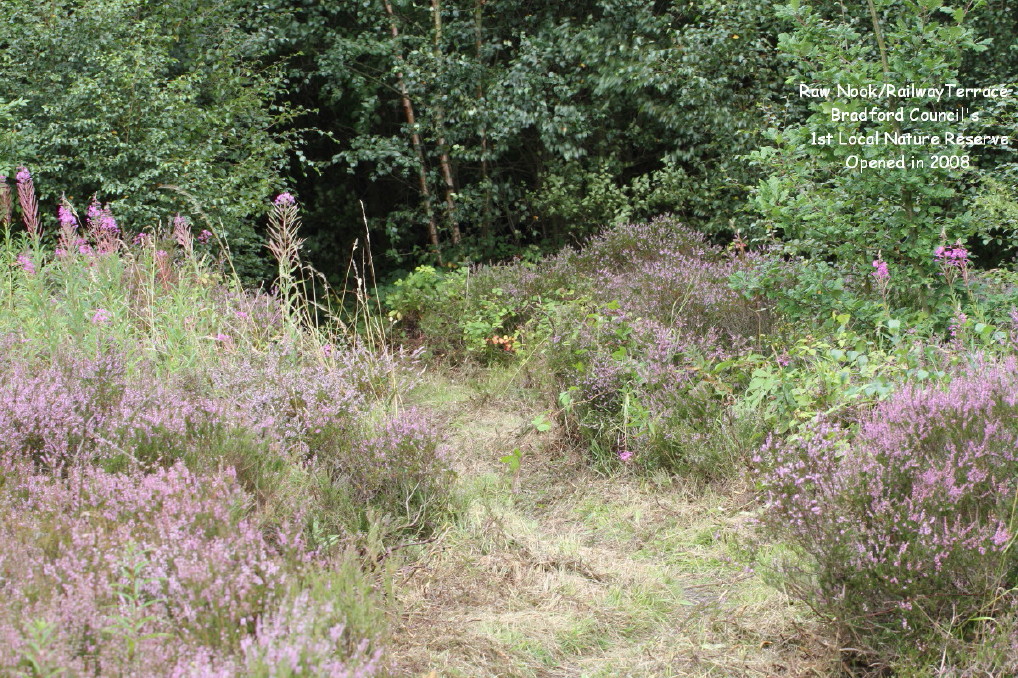
On Saturday 29th of July I was looking for any new day time moths to record at Raw Nook nr and Caldene fields.  At the former site I was looking in the heather near to the pond on my hands and knees (hoping no one would be watching me…) when a small moth caught my eye.

After several times of trying to photograph it I decided to catch it in a specimen tube to get a closer look at it and to take a number of photos.

I let the moth go and headed to the large heather patch near the bridge by Caldene fields.  I also searched there and thought I saw another of the same moths.

At home I was unsure what species the moth was but my research revealed the moth to be Aristotelia ericinella a heathland species whose lava feeds on heather.

I checked on Yorkshire Moths for it’s status and it is described as:  National Status: Local

Local Status: Rare and local resident.

County records total of 37 records from 17 sites. First recorded in 1883.

Surly… I thought I must have miss identified the moth.  So I contacted Charles Fletcher from Y Moths for a second opinion.

The reply came…

Ooh that’s nice Martyn.  Not known from your area, in fact probably no records within about 25 miles, but not uncommon on lowland heaths.  The only place I’ve seen it is at Strensall where it is pretty common.  Also not uncommon at Skipwith and Hatfield Moors.  I wonder what else you have lurking there!

Regards Charlie

A brilliant record for our area and group.  This goes to show what a valuable asset the lowland heath habitat is at the site…and what excellent hard work we as a group are doing to preserve it.


Citizens help out and welcome funds…

Citizens help out! what do you mean…Well let me explain.

Sunday the 23rd of July was a Low Moor & Oakenshaw Conservation group work day grubbing up sapling Silver Birches and removing Rosebay  Willowherb from the lowland heath at Raw Nook nature reserve.

But today we had a group of young people from the ‘ National Citizen Service ‘ helping up as part of one of their projects.  And not only did they give us their time and hard work but as part of the project they raised funds our group through sponsorship gained by speaking to businesses etc.

The total they raised is around £200…..Which is brilliant. So a massive big thank you from the L&O.C.Group

And this group of young adults who were a real credit to the N.C.S had another surprise as they had secured sponsorship from //www.ata-builders-merchants.co.uk/ of Cleckheaton and the company donated a wheelbarrow, spades and gloves to our group.  So again many many thanks to ATA builders for their generosity.

So it was time to get stuck in to the days tasks and by did everyone get stuck in..

But suddenly Charlotte stated ‘ Ive found a moth ‘ I went to look and it was a Map-winged Swift only the second record for the site…so well done Charlotte..

The Silver Birch saplings were grubbed up using matlocks and an estimated count of uprooted trees must have been well over 250…leaving a large area of heather to flourish and wildlife to take advantage.  And this happened when I heard a loud shout from James who was busy digging up the Birches ‘ Martyn I’ve found a blue dragonfly’ I ran over to find..


a stunning newly emerged Emperor Dragonfly.  Excellent observation skills James..

But there was another task pulling up the Rosebay Willowherb which was gradually suffocating the heather.

And working diligently together as a team they cleared plants from a huge swath of heather.

So by 16.00 this excellent hardworking group were on their way home.  But from speaking to many of them they had really enjoyed the experience of working and learning about our environment and it’s ecosystem.  So what did I,  and I’m sure the rest of our group gain from their presence,  well…watching the next generation been so enthused by the tasks they were undertaking.

Future good luck to you all….


Sightings update…

I found a juvenile female Common Redstart that appeared at Caldene fields on the 17/7/2017, the first sign of moving birds as the species does not breed locally.

Three Poplar Hawkmoths and a single Peppered Moth were at Caldene fields on the 18/7.

And I found a new Hoverfly ( Eristalis hoticola) at Raw Nook Nr on the 16th bringing the total of species list of recorded Hoverflies to 11 that I have identified.

And whilst cutting back the Bramble at Raw Nook Nr on the 19th I disturbed a Buff Footman moth which I have not recorded there before.


Butterfly survey…

Yesterday as the sun shone I conducted a butterfly survey at Raw Nook Nr and Caldene Fields.  A total of eight species were found which is relatively poor for mid summer.  The butterflies I expected to record but didn’t were the Small tortoiseshell, Common Blue, Peacock and perhaps Red Admiral.  The butterfly that appears to be doing very well is the Ringlet with a minimum count of 44 at Raw Nook Nr and 35 at Caldene Fields.

The white butterflies were both down in numbers and a poor count of 4 Meadow Browns at Raw Nook Nr was poor.

On a better note the first Gatekeepers (below) appeared with 1 at Raw Nook Nr and 2 at Caldene Fields.

The Straw Dot moth is enjoying the summer with a good count of 37 at Raw Nook Nr and 11 at Caldene Fields.

Two Poplar Hawmoths were at Caldene Fields last night.


Second Blackneck found…

The wildlife site just off Dealburn road at Low Moor is proving to be a bit special.  Although it is not part of my local patch (the 3 sites covered in this blog) I am recording and monitoring the fauna and flora as I believe the site has real ecological value.

During my last two visits I have been observing the local day time moths.  There are two species of Burnet moths the Six-spot and the Narrow bordered Five-spot which breed in the area

Narrow bordered Five-spot Burnet.

I have also found on two occasions in July a Blackneck moth which is not a common moth locally.

I have only one previous record which was at Caldene fields on 12/7/2016

According to Yorkshire Moths the Local status of the moth is described as: Scarce and local resident.

l


BEES visit Dealburn road wildlife site…

Yes on the 20th of June 10 BEES descended on the Dealburn Road wildlife site where I am monitoring and recording the flora and fauna.

BEES are the Bradford Environmental Education Service and we met up at the entrance to the site.  What was nice for me was that many of them had never visited the site before.  But one did know the site well and that was my friend Joan Dobson who with her excellent botanical knowledge is helping me create a plant and grasses species list for the site.

Possibly the main reason the group had wanted to visit the site was to see the Bee Orchids which I discovered last year.  However, whilst one of the group found a single Bee Orchid just off the main pathway there were no Bee Orchids at the location I had found them last year.  Oh dear I thought!

However, after frequently stopping to admire the Small Heath, Common Blue, Ringlet and Meadow Brown butterflies we found ourselves on the main tract back to Dealburn Road.

When suddenly one of the group shouted ‘I’ve another found a Bee Orchid’  then another, and another.  The final count was 14…and all in a different location…Brilliant

As well as updating my our records I submitted the update to the West Yorkshire Ecology Service


Conservation day and updates…

Yes it was a work day on Saturday for our group the Low Moor & Oakenshaw Conservation Group.  The session in the main was to try and keep the Japanese Knot weed at Toad Holes Beck at bay as well as clearing Bramble and Nettle from encroaching onto the footpaths.

There was only one winner with this ‘ Very ‘ small Knot weed…

Today I visiting Dealburn Woodland site at Low Moor with friends from BEES.  We found an excellent count of 14 Bee Orchids…(last years count was 6).  And interestingly all were found in a different location within the site.

Also a minimum count of 5 Small Heath and 3 Common Blues were observed.

Small Heath

Common Blue

Just like the old days…

Yes it was just like the old days this morning at Caldene Fields with a Skylark in full song for about an hour. Sadly as I expected it couldn’t find a mate and drifted south.  Whereas, say twenty years ago the species was a regular breeding bird.

On a better note I found a beautiful Lime Hawkmoth at Caldene fields my second record of the at the site

error: Content is protected !!