Home

Rose-ringed Parakeet

This morning at the watchpoint a Rose-ringed parakeet came in from the N and flew overhead to the south.

Also whilst this is an urban site with sedantary House Sparrows in the locality I have never recorded a HS at the watchpoint until today.

A female came in from the N and landed in a small nearby Hawthorn bush. It stayed in it’s resting postion for about 15 minutes before leaving and gaining height to the S. Calls of Meadow Pipits heard over head but few seen. An ‘Early’ flock of Wood pigeon to the S were deemed moving birds

Peregrine falcon

This morning it was an early start at the Vis-mig ( visible migration) watch point. Migration in our area in early September is just starting and it’s always nice, like this morning to find the first moving Chaffinch of the autumn or the first Meadow Pipit as it moves south for the winter.

However, the the highlight this morning was a faint call…Peregrine. And sure enough a Peregrine Falcon was flying high moving N/E.

What was interesting was below the falcon was a group of BH gulls moving south. The falcon closed it’s wings and dived. However, the gulls had spotted the danger and scattered and the falcon swooped back up and carried on it’s journey.

A Common Whitethroat and 4 Chiffchaffs were grounded.

We’re on the map…

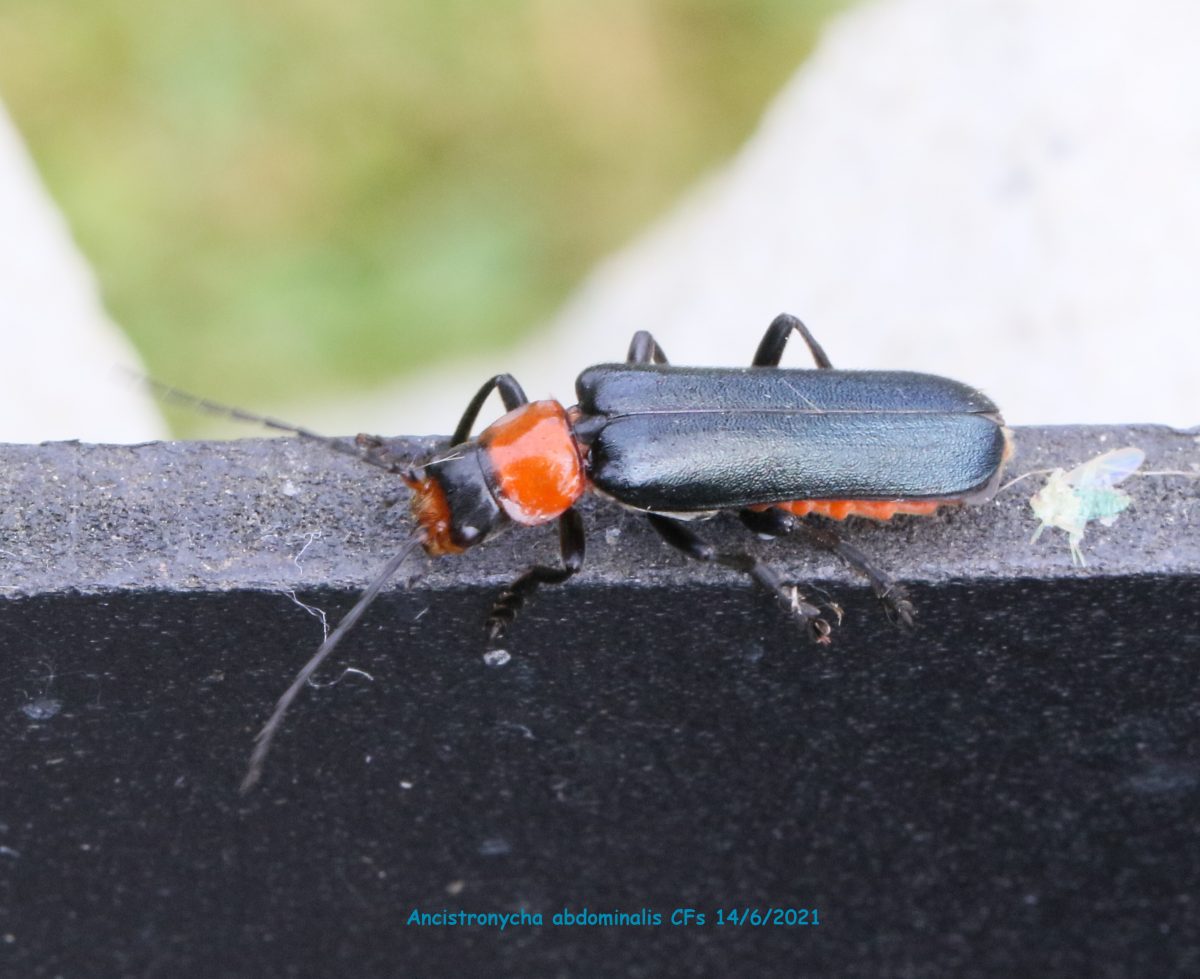
You may remember the great news I had when I found this beetle (opposite) Ancistronycha abdominalis ( Blue Soldier Beetle) at Caldene fields on the 14/6/2021.

Because the beetle is uncommon I sent my observation to IRecords for clarification.

I have just received conformation from Michael Geiser NH Museum of IRecords that the sighting has been accepted!

According to the latest NBN Atles data there are only 209 UK records for this Beetle.

So this is an excellent record for our URBAN wildlife area.

Celebration time…

I have been studying and recording moths at Caldene fields, Raw Nook NR and Toad Holes beck for well over 20 years. The data I have collected gives a good indication not only into the population trends of the moths in the recording area but of the health of our urban environment and other local ecosystems.

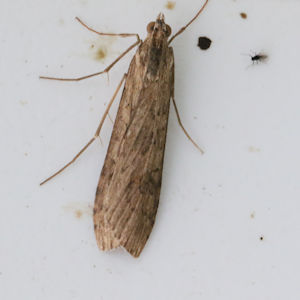
So it is celebration time, as the rather unaspiring adjacent Rush Veneer –Nomophila noctuella was my 400 hundredth moth species I have recorded in the above urban sites.

A quote from Butterfly Conservation on moths states:

  • Areas rich in moths are rich in other invertebrates. These collectively provide a wide range of environmental benefits, including pollination and natural pest control.
  • Moths and butterflies are an important element of the food chain and are prey for birds, bats and other insectivorous animals (for example, in Britain Blue Tits eat an estimated 50 billion moth caterpillars each year).

It will be interesting how many more moth species will be recorded over the coming years in our urban wildlife oasis.

Beware of the Devil !!!

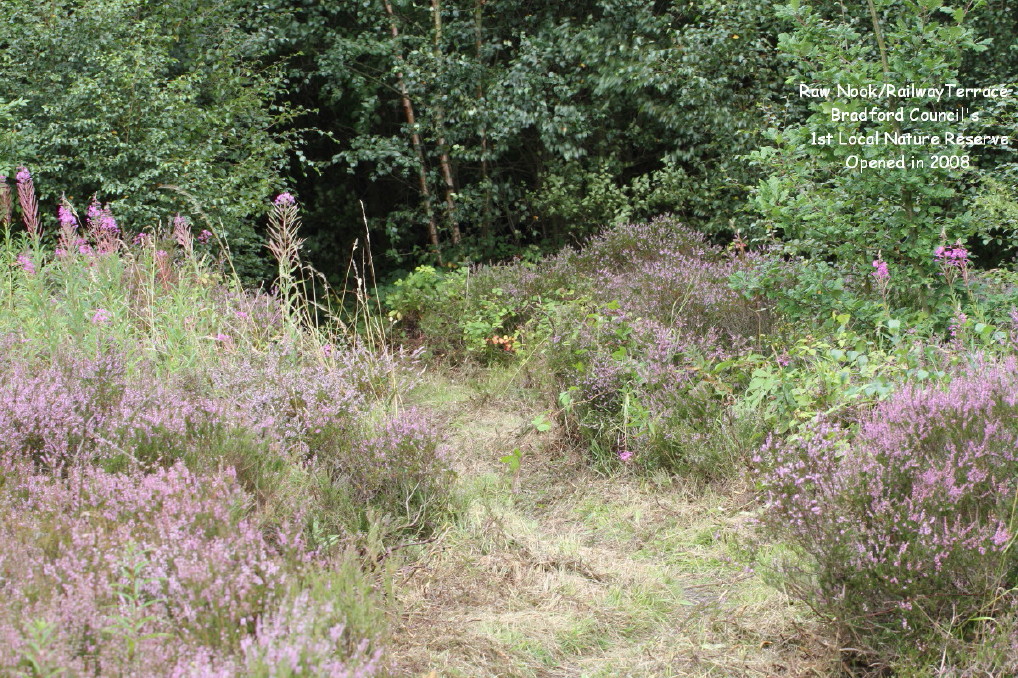
On Monday the 23/8 I did some survey work at the heather patch near the bridge at the top end of Raw Nook NR. I was netting to see if I could find any moths or other insects of interest.

I was on my hands and knees looking for a Mottled Grasshopper which I feel must be present on the site but as yet I have had no luck finding one!

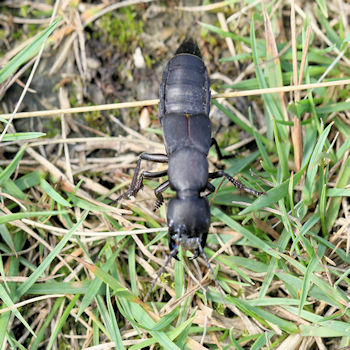
However, I was suddenly aware of a large beetle (25mm to 28mm) moving towards my leg! I immediately jumped up as I thought it looked devilish big.

I had no idea what it was so I took some photo and did some research. It is a Devil’s coach horse beetle! a new species for the reserve. https://www.buglife.org.uk/bugs/bug-directory/devils-coach-horse/

Thankfully the pond at Raw Nook had a small amount of water in it…and it was like the old days!! with a female Southern Hawker egg laying, 3 Common Darter including a pair in the mating wheel and a stunning Emperor Dragonfly. Sadly though all the eggs will not survive as the pond will dry out and all will be lost.

Four Common Buzzards also drifted N over Caldene fields. This morning 3 juvenile Blackcaps were also at the fields and 13 Sand Martins were feeding over the Low Moor tip.

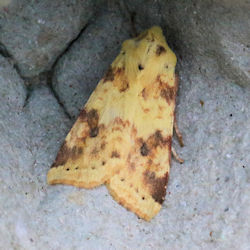
Talking of the autumn feel…starting to find more autumn moths like this lovely Sallow today at Caldene fields

Low moth numbers due to cool weather

This period of unexpected cool weather has certainly affected the number of moth species attracted to the moth trap. It appears mainly to be the micro moth that are suffering which in turn affects other feeding species like Bats.

However, this morning whilst there were few moths caught and released a couple of beauties stood out. This newly hatched Pebble Prominent (Top)

And this wonderful Canary-shouldered Thorn (Below)

Juvenile warblers like Willow Warblers and Chiffchaffs are moving from there breeding grounds at this time of year and feeding up in preparation of migrating south. So keep an eye out for them as they feed on insects in your gardens.

Next generation find a new plant…

On 10/8/21 I took my granddaughters on a nature walk at Raw Nook NR. We quickly found a number of butterflies species including this lovely Holly Blue

which was feeding on Rosebay willowherb

One of the places they love to go is in the Hazel wooded area in the middle of the meadow.

This is an excellent shady area and is really good for fungi.

We had only been in the area for a couple of minutes searching for anything of interest when my excited grandaughter shouted ” What’s this grandad?”

The fruit of the lovely Cuckoo-pint Arum maculatum.

My first thoughts were…Yes common but I don’t recall it been recorded here before.

Then we had a search round and found another one but this one’s fruit was not as developed and was greener.

Then it was my turn to get excited as it was a new plant for the reserve….

Other recent sightings at Raw Nook NR on the 11/8 were another 14 spot Ladybird, 7 Gatekeepers butterflies, and maybe a very early sign of autumn, 9 Swallows moving south.

Rare plant find at Raw Nook NR…

Hands up…I have been that busy with Moths/Butterflies etc. I hadn’t checked my email properly. That’s the first part of the story.

Whilst correcting this issue on the 20/7/21 I noticed one from Leah Poppy who had been down to the reserve on 17/7/21 and found two Monotropa hypopitys or Yellowbird’s-nest https://species.nbnatlas.org/species/NHMSYS0021240704

Then within minutes of reading Leah’s email I received another email from Stuart Tordoff who was down on the reserve with B.B.Es and Alice Gingell and others doing a plant survey to say they had found the same two plants!!!

Research reveals that the BSBI ( Botanical society of Britain & Ireland) hold 603 records for the species and it’s status is : Widespread throughout the UK but increasingly rare in the north and west.

I have submitted the record to the BSBI ( finder Leah Poppy ) and the Bradford Botany Group as it is an excellent record for the reserve.

Myself and Peter Gurney WYT went down later in the afternoon and found the plants which was a really exciting experience.

If anyone would like to see our important VIPlant…please email me for direction within the site at mvi.priestley@blueyonder.co.uk

May I take this opportunity to thank Leah Poppy and all my good friends at B.B.Es for finding this wonderful unusual Yellow bird’snest, plant

.

error: Content is protected !!