Winter Thrushes are well and truly in our area now with a minimum count of 90 Redwings seen resting at Caldene fields yesterday. A fieldfare was heard calling within the group. Of interest was a flock of 11 Bullfinches which landed in trees at Raw Nook LNR. I suspect some of these if not all were migrants.
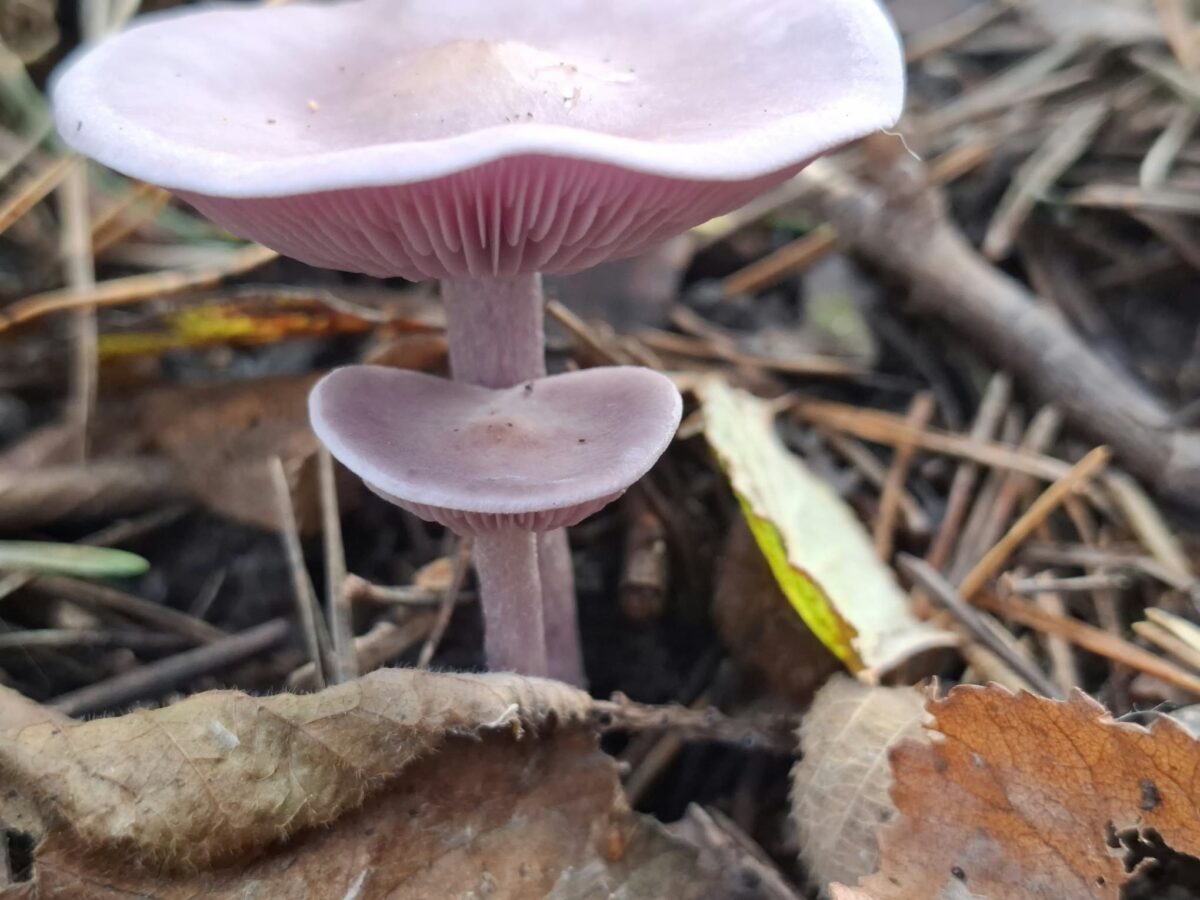
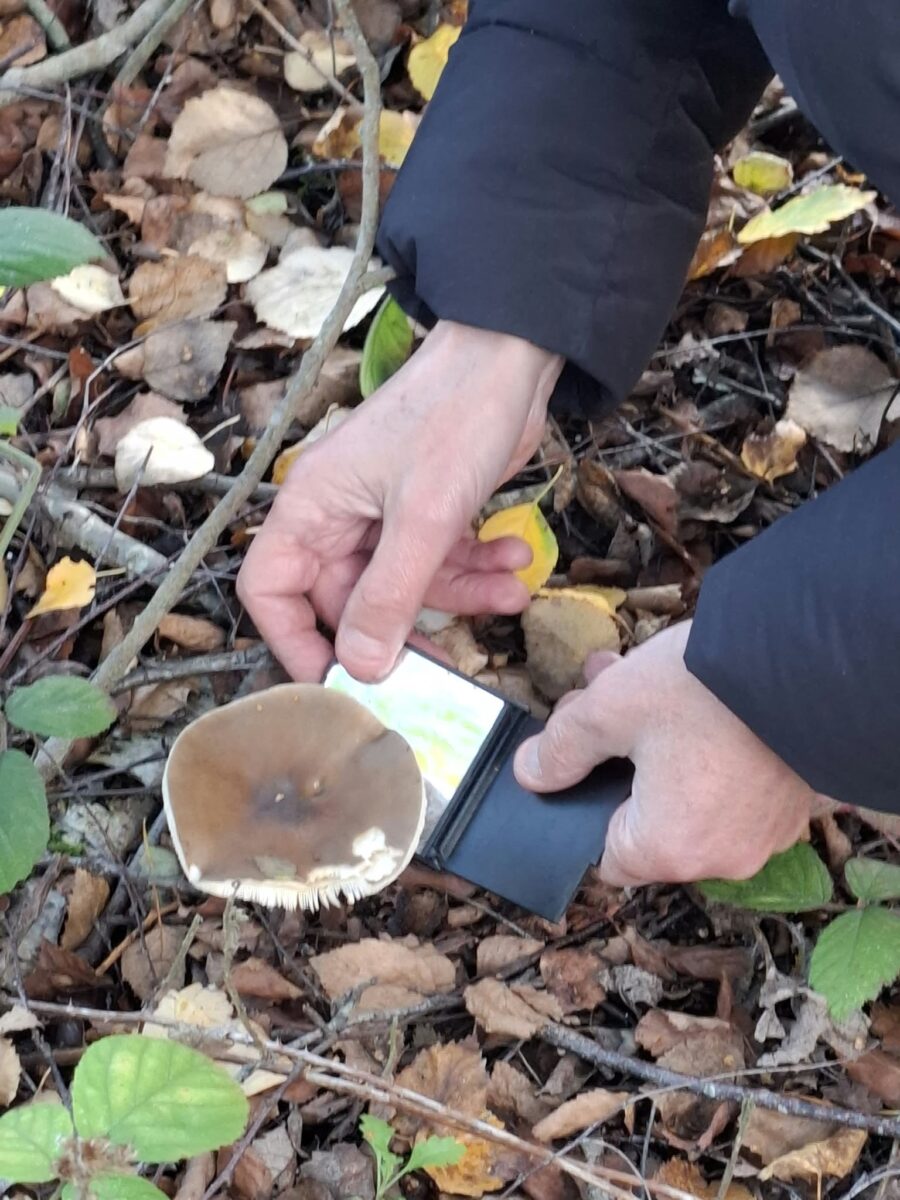
On a different note I found this morning 3 Wood Blewit Collybia nuda fungi (above) just behind the first batch of meadow cuttings at Raw Nook LNR (nearest the gate) which is a site first.
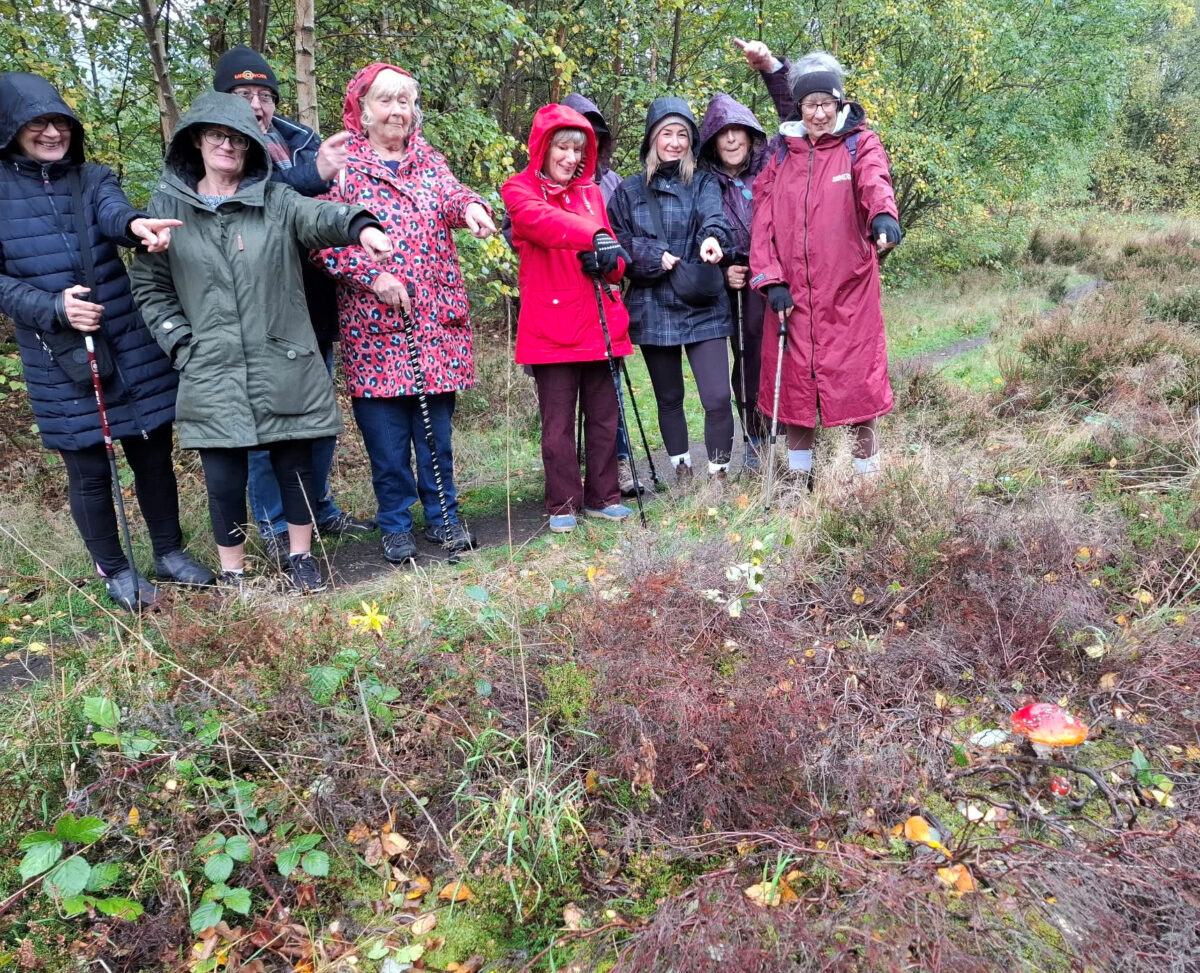
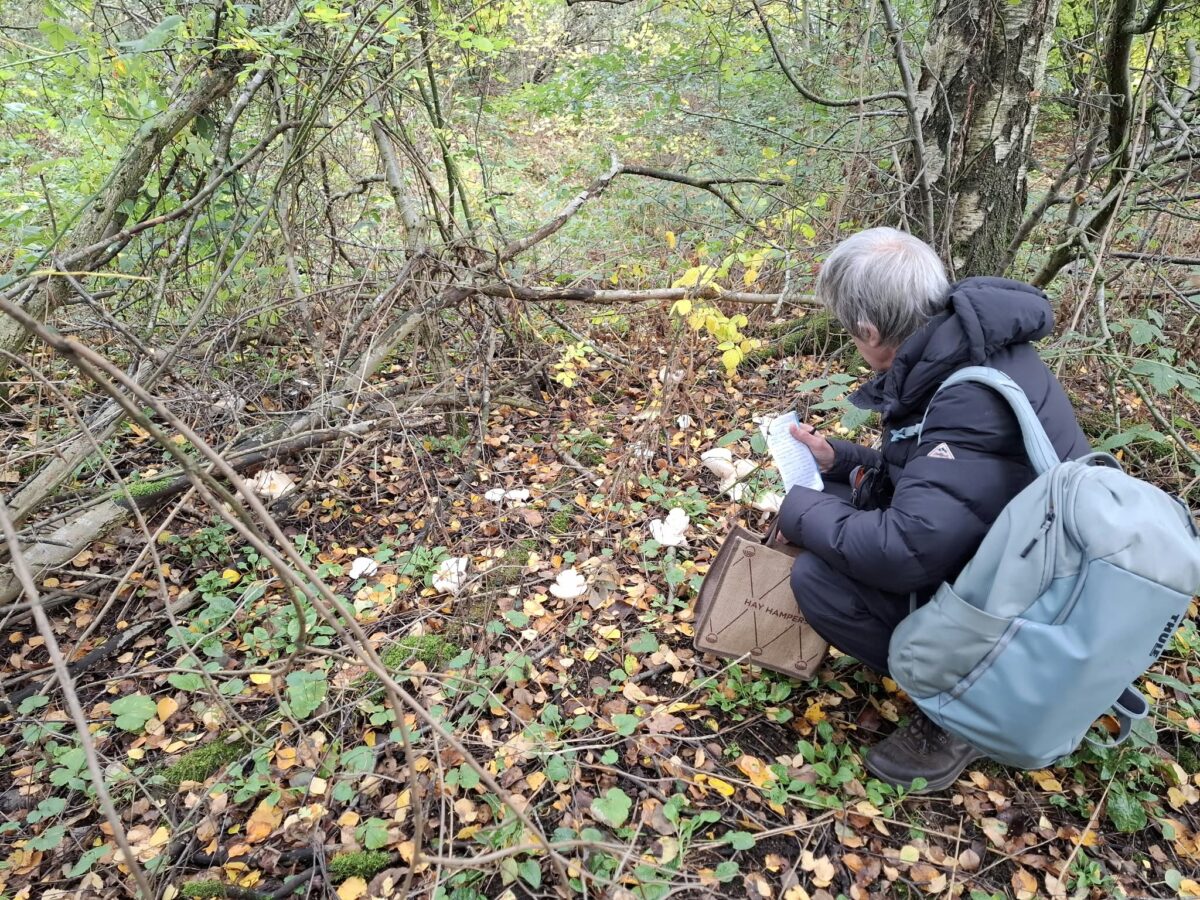
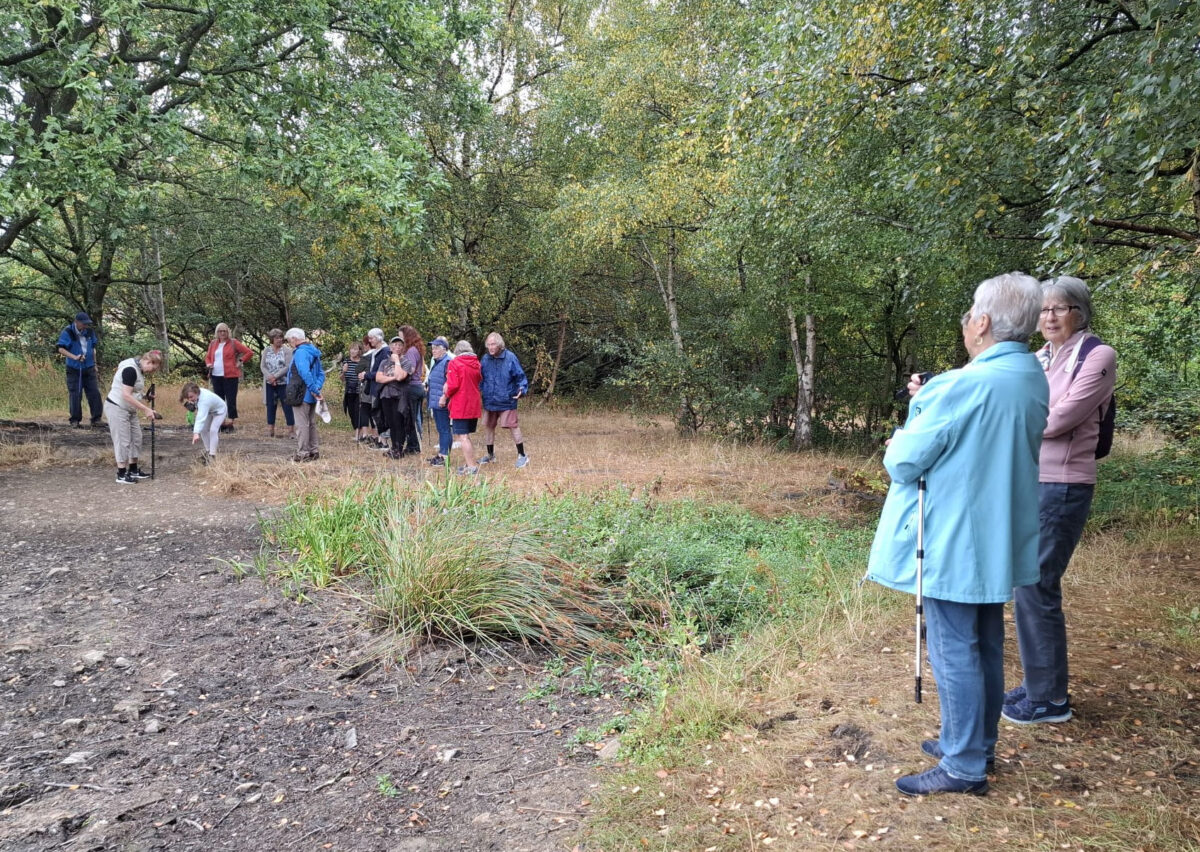
On Monday the 26/10 I took the Walkers & Talkers from Oakenshaw on a Fungi walk around Raw Nook LNR in the pouring rain.
One of the main aims of the walk was to explain the different parts of a fungi and how fungi works within the local ecosystem. Early on in the walk I explained that it is fairly unusual to find a pristine Fly Agaric fungus as small mammals and insects are quick to feed on the fungus.
No sooner had I said that when someone shouted out ‘ Look at That! ‘ (ABOVE PHOTO) Not only was it a pristine Fly Agaric but a ‘Very Large one too! ‘ and it was well photographed by the group.
One of the interesting points was finding an Ugly Milkcap fungus yes that is it’s real name! This Milkcap family genera Lactarius and Lactifluus when damaged they produce a milk fluid which quickly dries and pools over the damaged flesh, helping to seal the injury against dehydration and microbial infection.
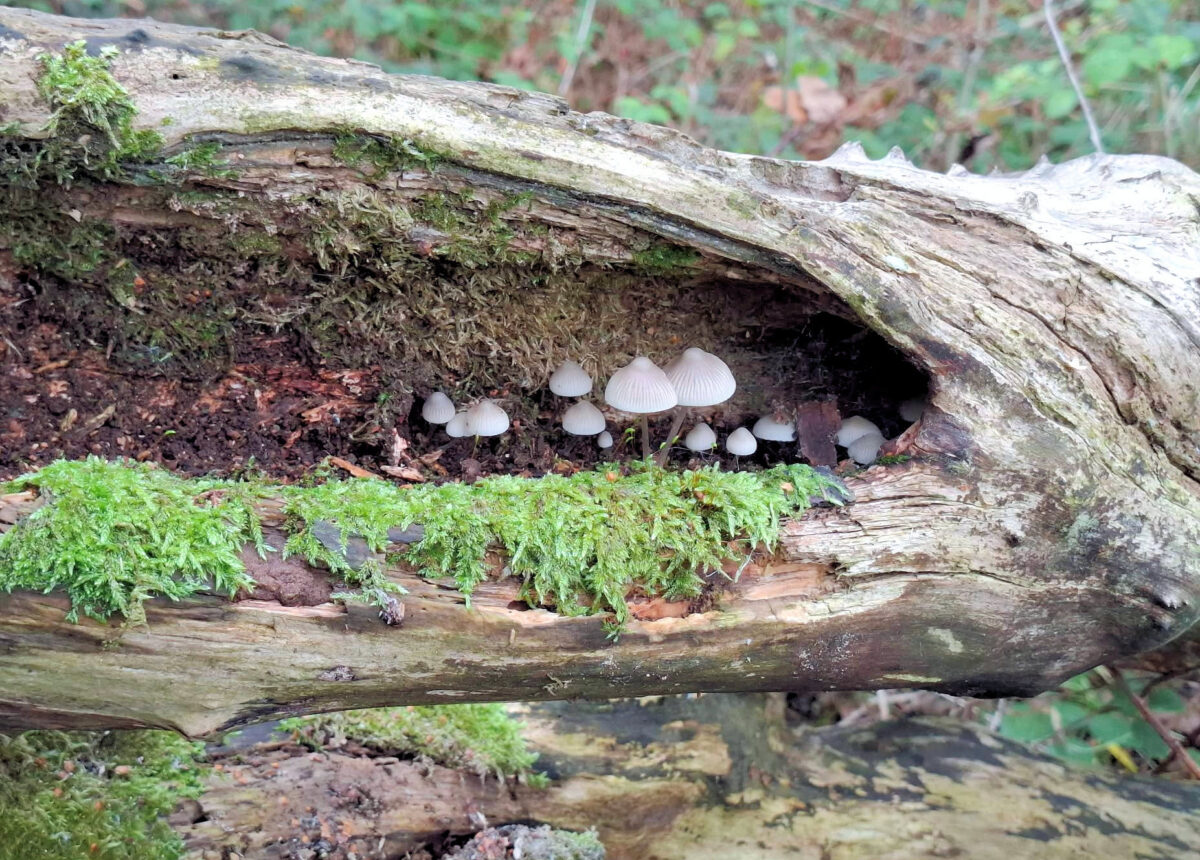
By the pond area I showed the group a number of Common Bonnets (Mycena galericulata) which were growing ‘ inside ‘ a fallen Goats Willow trees which just illustrated the magical wonders of fungi…
On the 22/10 I invited John Gavaghan who has a keen interest in fungi and is very knowledgeable on the subject visited Raw Nook LNR. My knowledge on fungi is limited so my hope was John could find some new species for the reserve.
The day was a great success with 28 species identified although not a single fungi was found in the meadow and no (usually common) Amethyst Deceivers were recorded near the Oak trees at the top of the site.
The excellent news was that an excellent total of 8 new species were recorded for the reserve.
These were: Collard parachute, Clustered bonnet, Rooting Shank, Ivory funnel, Lilac bonnet, Split Fibrecap, Bluing Bracket and Scaly Earthball.
After submitting the 8 new species the total number of fungi recorded at the site now stands at 148.
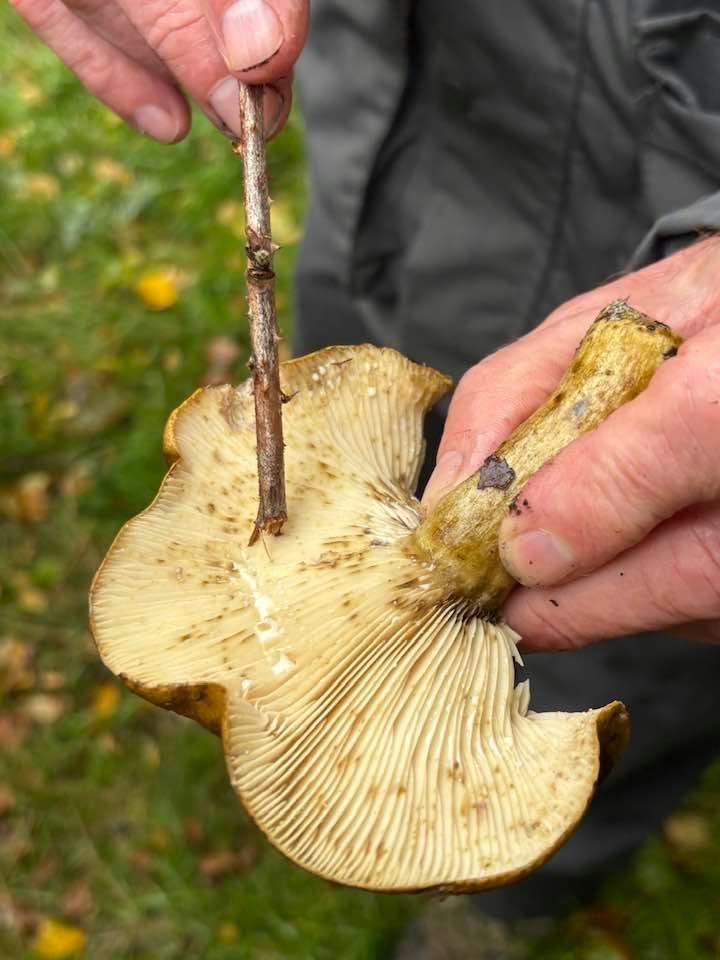
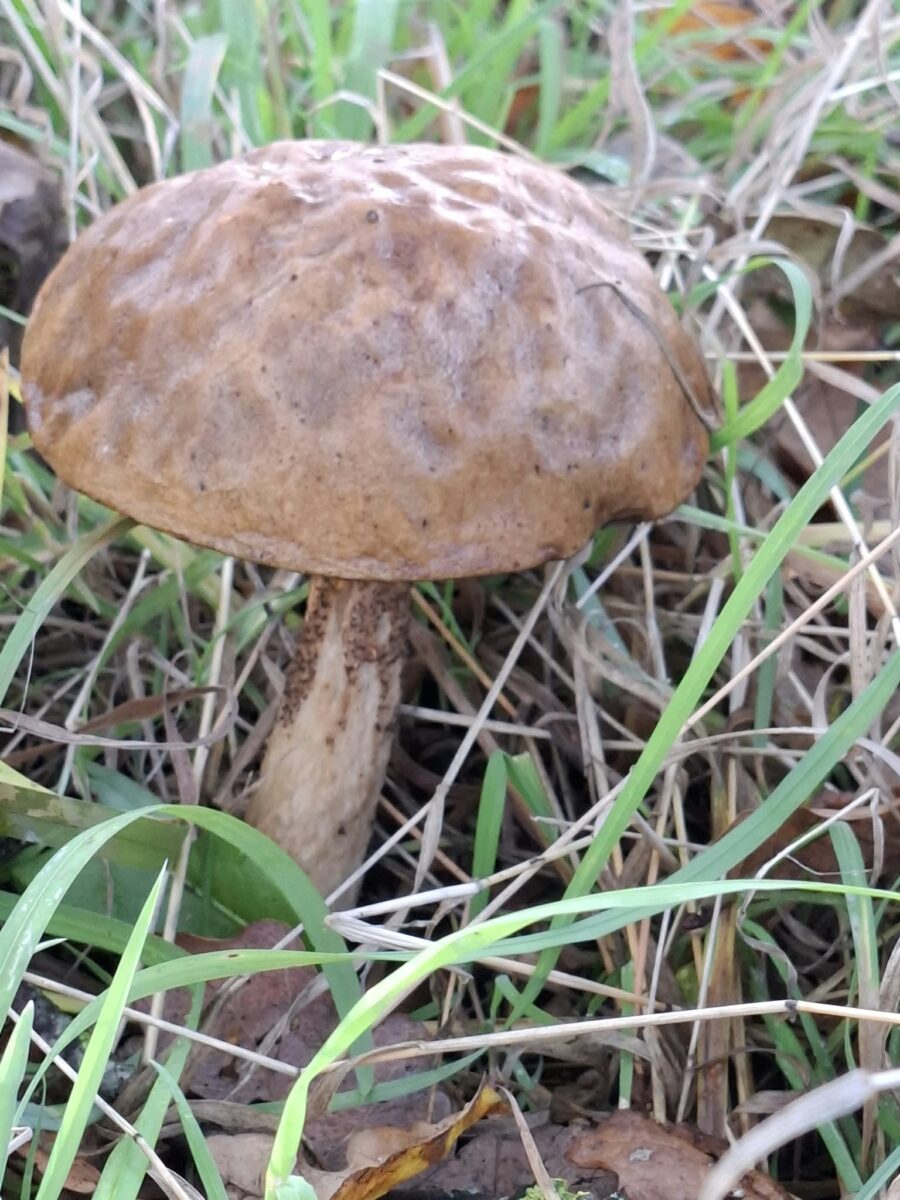
For anyone who like the larger fungi there is a lovely large Brown Birch Bolete fungi ( Below) near the large Oak tree by the pond along with a small group of Sulphur Knight mushrooms.
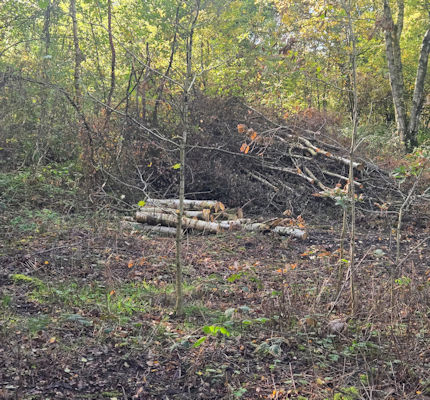
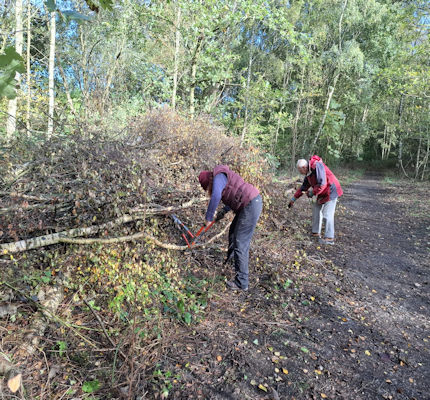
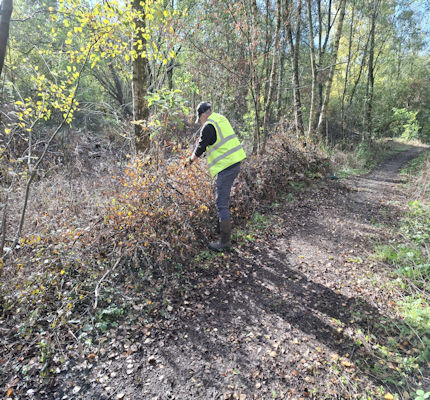
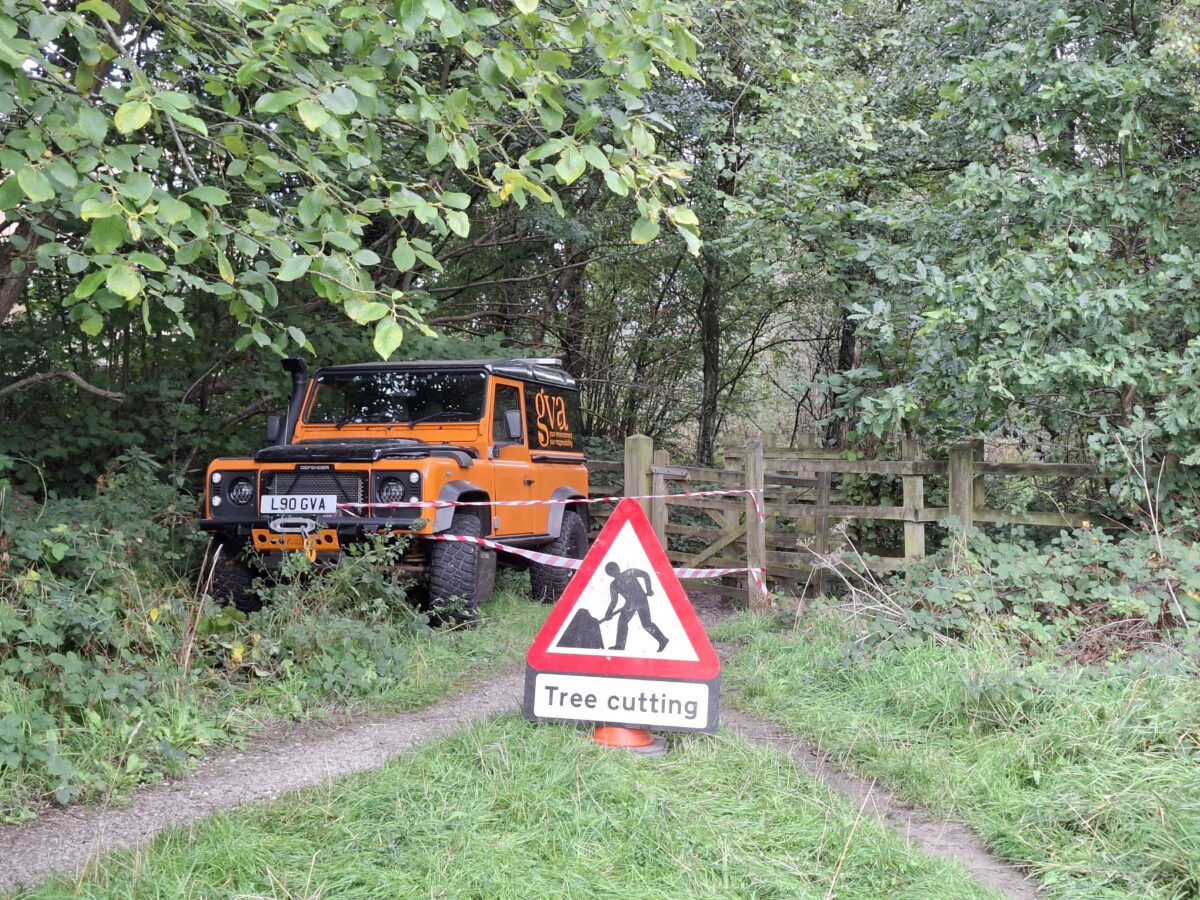
Following on from my last post about the removal of some, mainly Silver Birch at Raw Nook LNR our conservation group had a workday to manage the brush that was left.
For those reading this for the first time the reason we had some trees felled was to open up, in parts the woodland floor to let more light in and to increase bio-diversity.
The aim of our work which is ongoing is to form a Dead Hedge which is a sustainable boundary of branches and twigs. This Dead Hedge will form a valuable wildlife habitat and will be used by many invertebrate species. Raw Nook LNR is an excellent reserve for fungi and the decaying wood will support even more fungi and mosses to appear.
Richard making a start with the Dead Hedge.
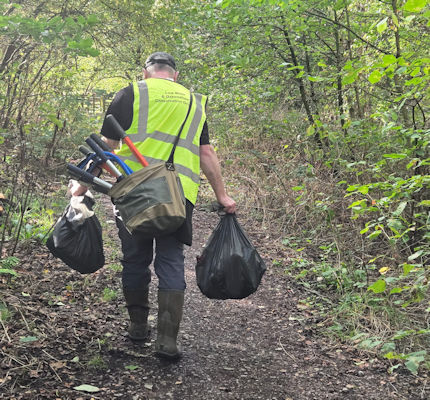
Sadly we had to collect rubbish thrown down by irresponsible people
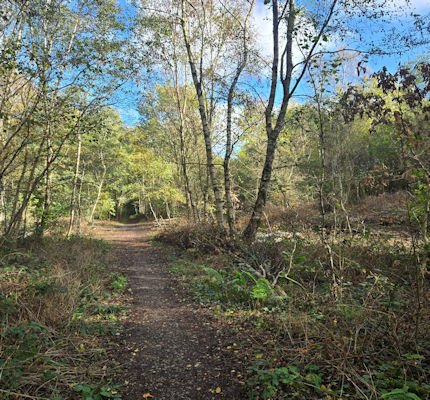
However, on a positive note you can now start to see the early signs of light reaching the woodland floor following the excellent work carried out by Bradford’s Countryside Services.
Bradford Countryside and Rights of Way and Yorkshire Wildlife Trust have been doing some vital management work at Raw Nook LNR.
For many years the woodland within the reserve has grown increasingly dense, and the closed canopy has reduced the amount of light reaching the woodland floor. As a result, ground‑nesting birds and many woodland wildflowers have declined. To restore a healthier structure, a small number of mature trees have now been selectively felled.
This will allow sunlight to reach the understory again, encouraging a richer ground flora and improving habitat for birds, insects and other wildlife. The felled timber will remain on site, where it will create valuable deadwood ecosystems that support fungi, invertebrates and small mammals — an important part of a naturally functioning woodland.
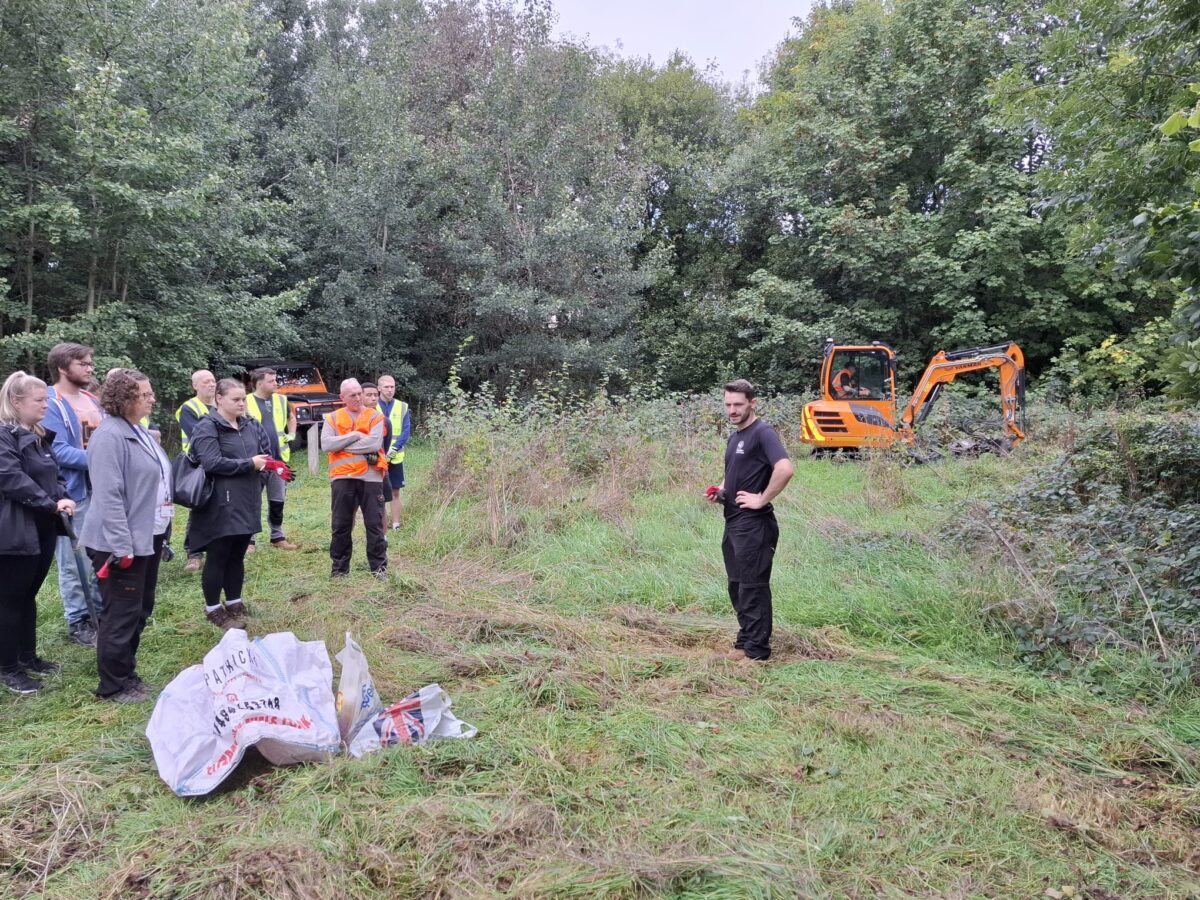
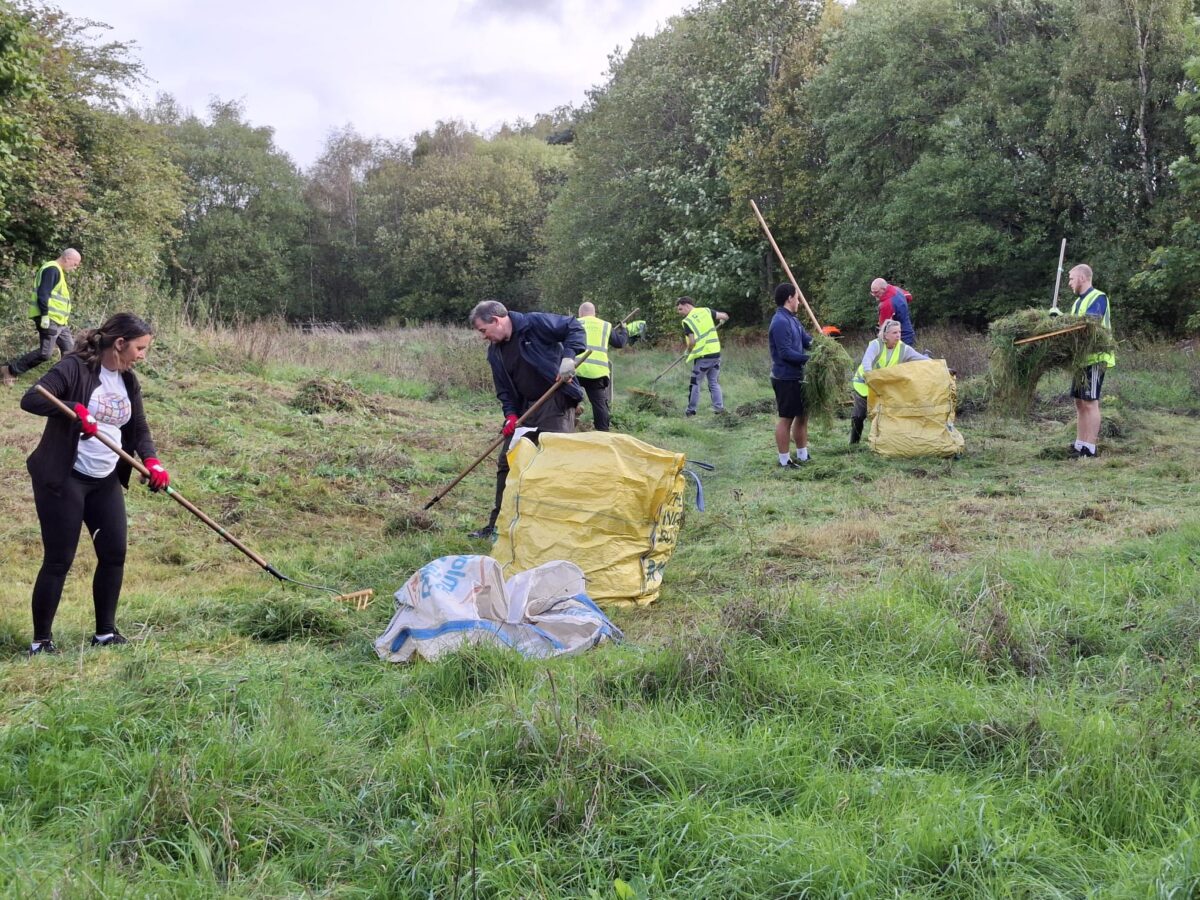
Peter Gurney from Yorkshire Wildlife Trust agreed to cut the wildflower meadow and arranged volunteers from Solenis Chemicals and NG Bailey both Low Moor companies.
Cutting was done by Peter and with so many volunteers raking the work was not so back breaking.
Our conservation group would really like to thank all the volunteers from Solenis Chemicals and NG Bailey and our good friend Peter Gurney YWT for all their dedication and hard work and ensuring that the wildflower meadow will be full of flowers and pollinators for next year
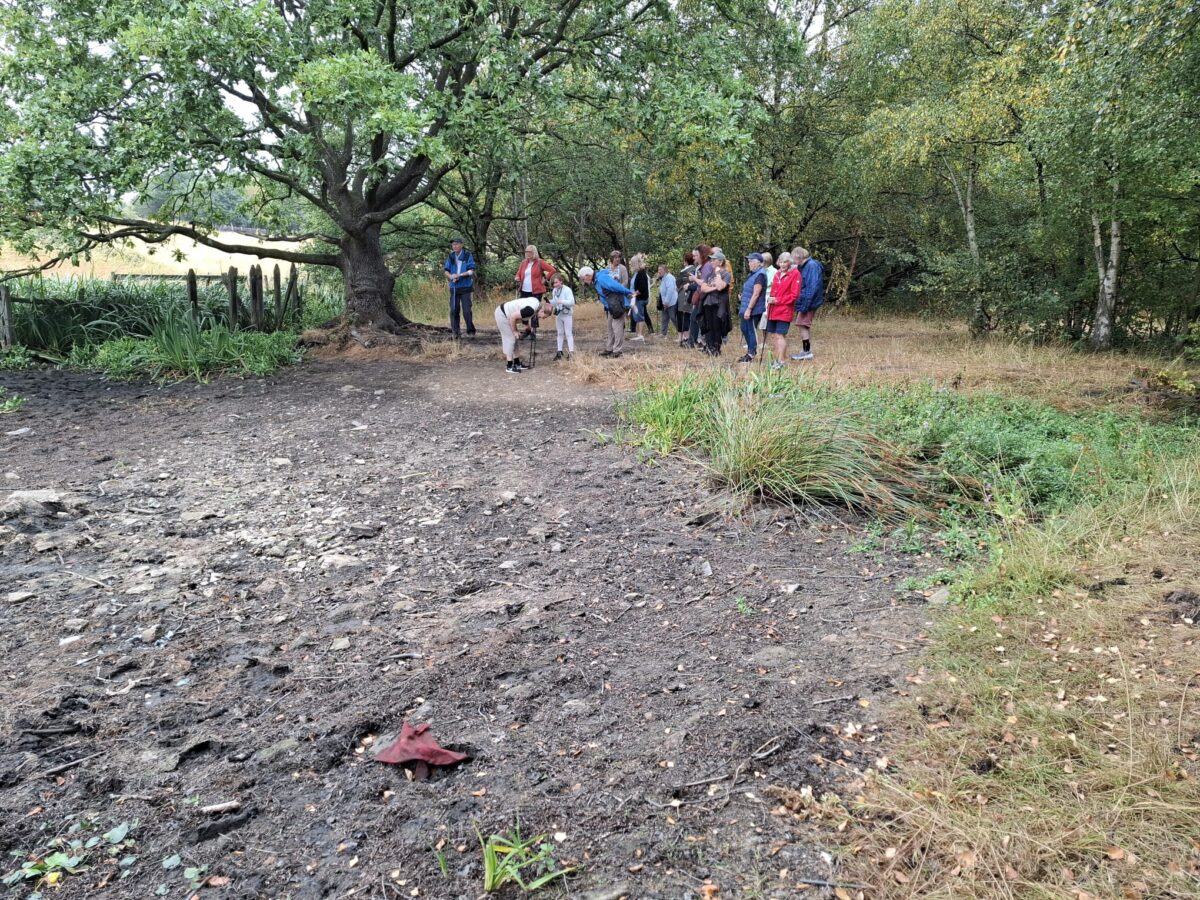
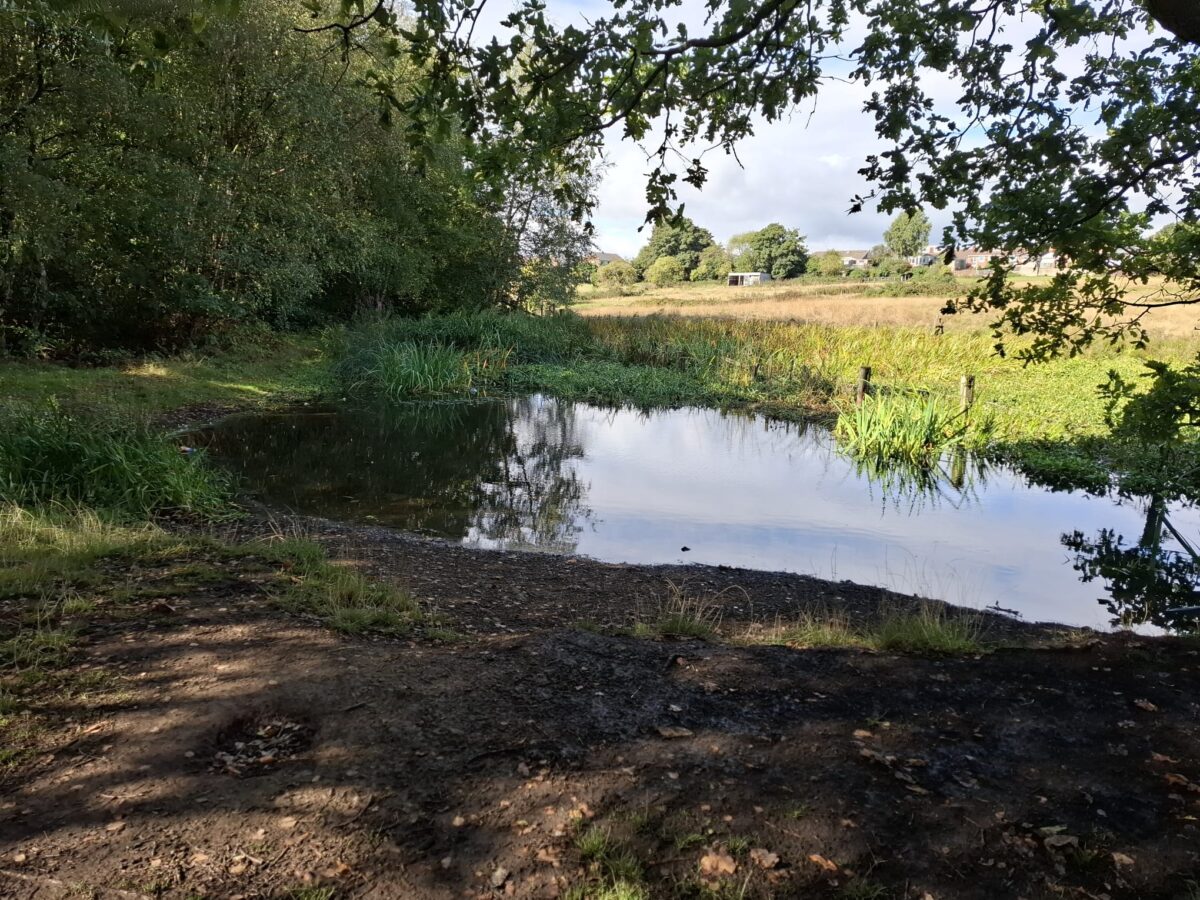
The pond at Raw Nook LNR/Caldene fields had almost dried up due to the constant hot weather with no rain during the summer.
My fear was if the clay bottom cracked due to drought like it did a few years ago the water would simply seep away and the pond may have been lost.
However, the recent heavy rains have saved the day and at the moment all looks good with the water levels.
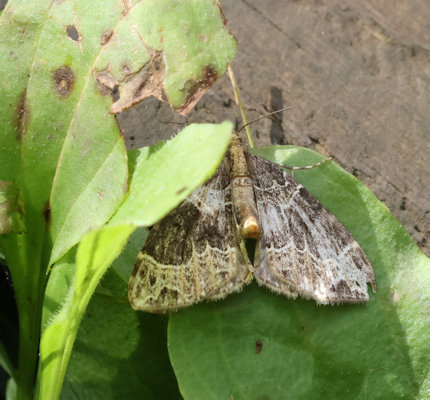
Relating to sightings I found a new moth species for Toad Holes beck this morning a Small Phoenix. It’s a common moth but I have only recorded it at nearby Caldene fields.
There are a number of Common Darter dragonflies about at the moment at both RN & TH Beck.
A worn Painted Lady butterfly was at Caldene fields on 30/8.
Migrant birds are starting to move south and I found a lovely male Common Redstart at CFields on 28/8
On Monday I took the Walkers & Talkers walking group from Oakenshaw around Raw Nook LNR.
Unfortunately the weather was cooler and dull with not a single butterfly seen, which was a big contract to previous sunny days where many were on show!
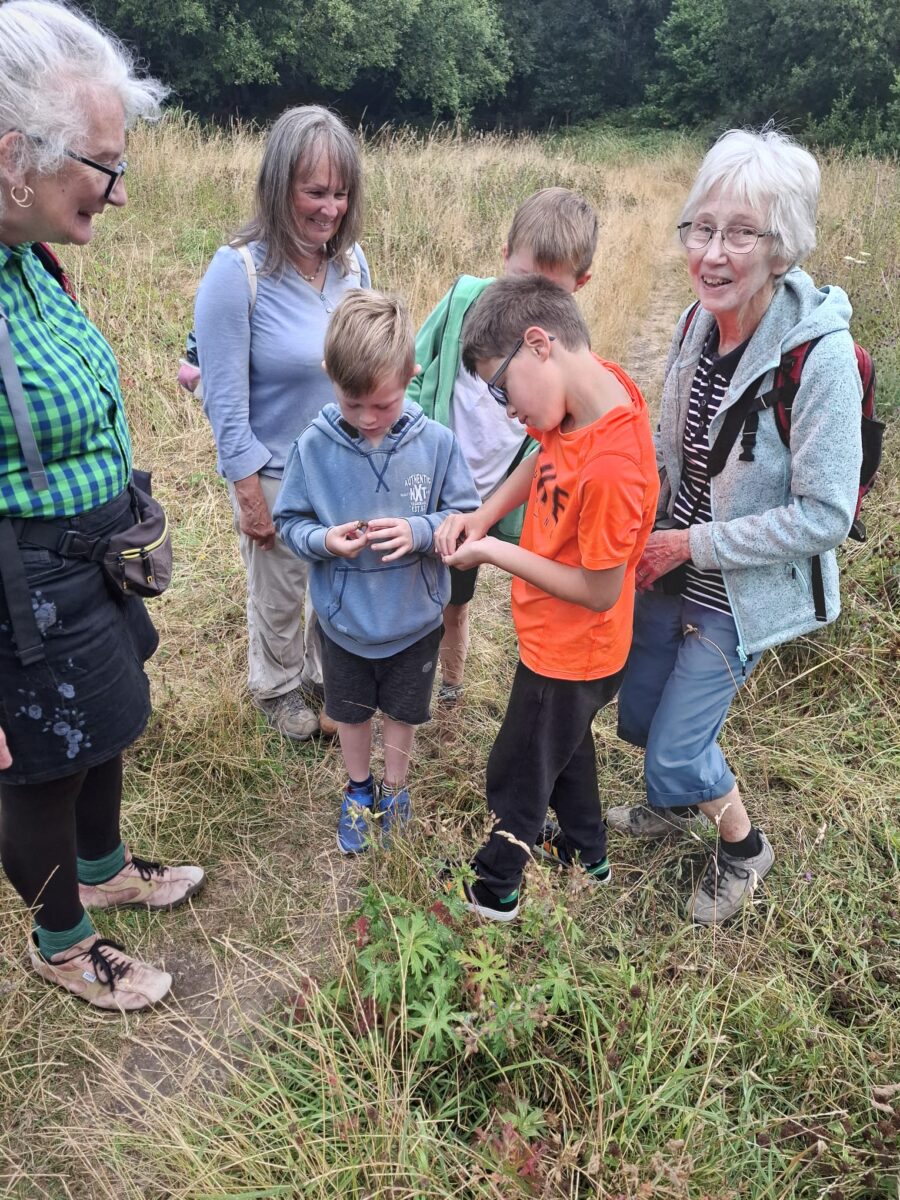
But it still was a good nature walk with the highlights been good views of a Southern Hawker dragonfly and two keen young girls found a young Toadlet which I managed to get into a glass tube so everyone could see it. However, the best bit was seeing the delight of the girls holding and releasing the Toad back into the near dried up pond.
Yesterday I took a party from B.E.E.S on a nature walk around Raw Nook LNR. The weather was warm but very dull and I was a bit worried there would be few insects about to show and discuss with the group. However, I WAS IN FOR A SHOOK!
The weather did start to improve and with 3 young eager children, with good eyesight we started to find an array of wildlife, like Froglets, Grasshoppers and various bugs and beetles.
In fact one bug proved to be a site first (Cinnamon Bug )
The boys enjoyed counting the froglets and Toads both in the meadow and at the shrinking pond.
A total count of 33 froglets and 5 Toads was achieved.
Migrant Hawker dragonflies were about as well as a single Brown Hawker.
Butterflies then started to appear and a rather smart Painted Lady was in the meadow along side low numbers of Gatekeepers, Meadow Browns, Small Whites, single Ringlet, Holly Blue and Red Admiral and a female Common Blue which was really nice to see.
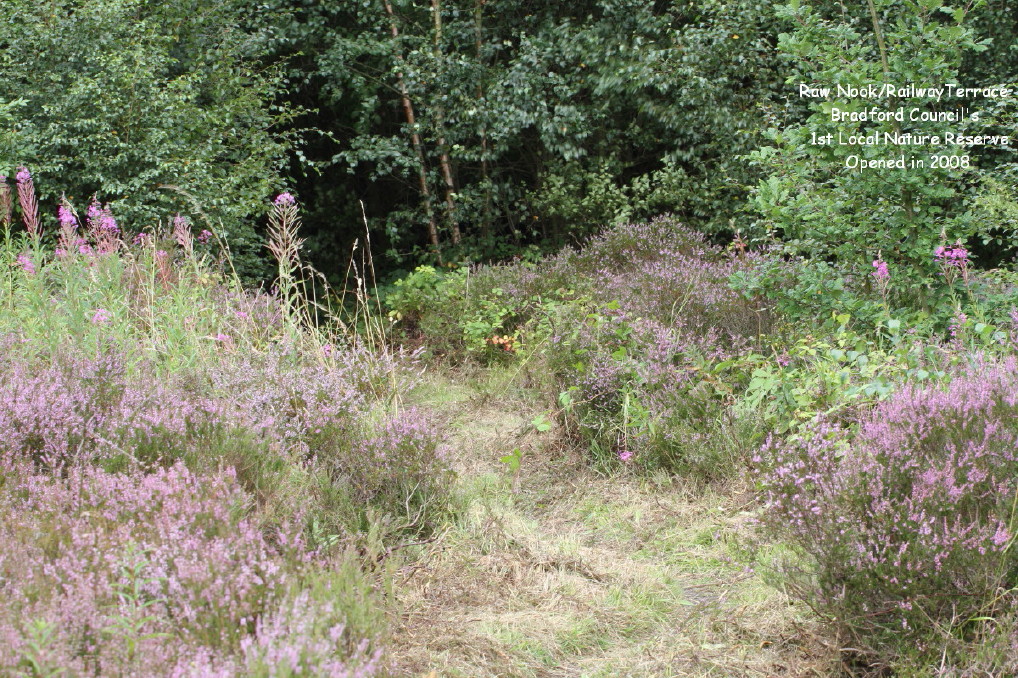
We then started to walk to the very top of Raw Nook LNR by the heather and found another two Painted Lady butterflies.
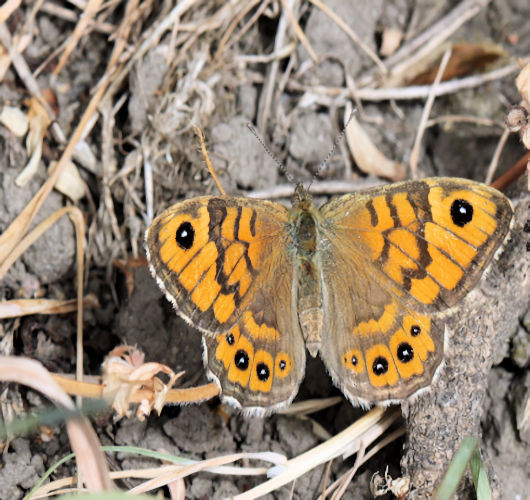
It was whilst walking in the area the Sue Dunn shouted ‘ What is this butterfly?
I looked in disbelieve as I SHOUTED IT’S A WALL BROWN!
The reason for the surprise was my last recoding of this butterfly which use to breed here was on the 24/6/2009…17 years ago
And there was even better news the butterfly looked as though it had just emerged so could well be breeding again at the site after all these years!
A Dewick’s Plusia – Macdunnoughia confusa moth was attracted to a NI Pheromone Lure at Caldene fields on the 25/7/26.
This rare moth is a migrant although numbers are increasing and there can be little doubt that it is now breeding in the south of Yorkshire.
My moth is showing little signs of wear whereas if it was a true migrant travelling many miles to get here I suspect it would be showing slight damage to it’s wings ect.
Also at Caldene fields I found a pair M+F of Common Blue butterflies which is slightly unusual in that I have never recorded them in that particular part of the fields.
It is pleasing to see that this year there is an abundance of their food plant the Bird’s foot trefoil so fingers crossed they breed.
This website uses cookies to improve your experience. We'll assume you're ok with this, but you can opt-out if you wish.AcceptRead More
Privacy & Cookies Policy
Privacy Overview
This website uses cookies to improve your experience while you navigate through the website. Out of these, the cookies that are categorized as necessary are stored on your browser as they are essential for the working of basic functionalities of the website. We also use third-party cookies that help us analyze and understand how you use this website. These cookies will be stored in your browser only with your consent. You also have the option to opt-out of these cookies. But opting out of some of these cookies may affect your browsing experience.
Necessary cookies are absolutely essential for the website to function properly. This category only includes cookies that ensures basic functionalities and security features of the website. These cookies do not store any personal information.
Any cookies that may not be particularly necessary for the website to function and is used specifically to collect user personal data via analytics, ads, other embedded contents are termed as non-necessary cookies. It is mandatory to procure user consent prior to running these cookies on your website.